Tag Archive for: Quality Management

Business management certification can help an organisation demonstrate that it has a structured approach to quality, consistency, process control and continual improvement.

For many businesses, this is closely linked to ISO 9001, the internationally recognised standard for quality management systems. ISO 9001 focuses on how an organisation manages its processes, responsibilities, customer requirements, records, internal audits, management review and improvement activity.

In simple terms, business management certification gives customers, contractors and procurement teams confidence that an organisation’s management system has been independently assessed against recognised requirements.

Business management certification is often used by organisations that want to evidence a structured approach to quality management. When linked to ISO 9001, it focuses on how the organisation controls processes, manages responsibilities, reviews records, handles customer requirements and supports continual improvement.

This makes ISO 9001 a relevant route for businesses that want their management system independently assessed against recognised quality management requirements.

This guide explains what business management certification means, how it links to ISO 9001, the benefits it can provide and what organisations may want to consider before applying for certification.

Simply Certification is a UKAS-accredited certification body providing independent and impartial certification assessment services.

If you would like to better understand your current position before applying for ISO 9001 certification, complete our readiness questionnaire here: ISO 9001 – Self Assessment

What is business management certification?

Business management certification is the independent assessment of an organisation’s management system against a recognised standard or defined set of requirements.

A management system is the way an organisation controls and reviews important parts of how it works. This may include processes, responsibilities, documents, records, customer feedback, internal checks and improvement actions.

When linked to ISO 9001, business management certification focuses on quality management. This means looking at how the organisation manages quality across its activities and whether the system is being applied in practice.

Business management certification is not the same as an individual training certificate. It usually relates to an organisation’s management system, rather than one person’s qualification.

For ISO 9001, the assessment considers whether the organisation has a suitable quality management system in place and whether there is evidence that it is being followed.

How business management certification links to ISO 9001

For many organisations, ISO 9001 is the most relevant route when looking at business management certification.

ISO 9001 is focused on quality management. It provides a framework for organisations that want to demonstrate how they manage customer requirements, process control, responsibilities, documented information and continual improvement.

This makes ISO 9001 relevant for businesses that want to evidence a structured approach to the way they operate.

An ISO 9001 quality management system may include:

  • A defined scope
  • A quality policy
  • Quality objectives
  • A process map
  • Clear roles and responsibilities
  • Controlled documents and records
  • Risk and opportunity considerations
  • Supplier controls
  • Customer feedback records
  • Complaint records
  • Non-conformance records
  • Corrective actions
  • Internal audits
  • Management review
  • Continual improvement actions

You can learn more about ISO 9001 here: ISO 9001 Certification | Demonstrate a commitment to quality

Why business management certification matters

Business management certification matters because many organisations are expected to provide evidence of how they manage quality.

Customers, contractors, framework providers and procurement teams may want to see that a business has clear processes, controlled records and a structured approach to improvement.

Without a recognised management system, this can be harder to demonstrate.

A quality management system linked to ISO 9001 can help an organisation evidence how it:

  • Understands customer requirements
  • Controls key processes
  • Manages documents and records
  • Reviews supplier performance
  • Handles complaints and issues
  • Records corrective actions
  • Completes internal audits
  • Reviews management system performance
  • Identifies improvement opportunities

Certification provides independent assessment of whether the system meets the relevant requirements and is being applied in practice.

7 essential benefits of business management certification

1. Clearer business processes

One of the main benefits of business management certification is clearer process control.

A business may already have processes in place, but they may not always be written down, reviewed or followed consistently. ISO 9001 encourages organisations to identify key processes and understand how they connect.

This may include processes for:

  • Enquiry handling
  • Quoting
  • Contract review
  • Planning work
  • Purchasing
  • Service delivery
  • Customer communication
  • Complaint handling
  • Internal audits
  • Corrective actions
  • Management review

Clearer processes help teams understand what needs to happen, who is responsible and what evidence should be retained.

For growing businesses, this can be especially useful. As more people become involved, relying on informal knowledge can create gaps. A structured quality management system helps reduce that risk.

2. Better control of documents and records

Business management certification is evidence-based.

This means an organisation should be able to show that its system is documented where required and that records are being kept.

Documents explain what should happen.

Records show what has happened.

For example, a process may explain how customer complaints are handled. A completed complaint record and corrective action record can show how the process was followed.

Good document and record control helps an organisation understand:

  • Which documents are current
  • Where information is stored
  • Who can approve changes
  • What records need to be kept
  • How records are protected
  • How long records should be retained

This is important for ISO 9001 because the assessment does not only look at whether documents exist. It also considers whether the system is being used in practice.

3. Stronger customer confidence

Customers often want reassurance that a business can deliver consistently.

Business management certification can support this by showing that the organisation’s management system has been independently assessed.

For organisations seeking ISO 9001 certification, this can help demonstrate that quality is being managed through a structured system.

This may be relevant when working with:

  • Main contractors
  • Housing providers
  • Local authorities
  • Public sector organisations
  • Framework providers
  • Commercial clients
  • Larger supply chains

Certification does not guarantee future performance. However, it can show that the organisation has a quality management system in place and that it has been assessed against recognised requirements.

4. Improved tender and framework readiness

Some tenders and frameworks ask organisations to provide evidence of quality management.

Business management certification linked to ISO 9001 can support this where the tender asks for certification or evidence of a recognised quality management system.

This can be particularly relevant for businesses working in sectors such as:

  • Construction
  • Retrofit
  • Renewables
  • Facilities management
  • Engineering
  • Manufacturing
  • Public sector supply chains
  • Professional services

It is important to check the exact wording of any tender requirement. Some may ask for ISO 9001 certification specifically. Others may ask for evidence of an equivalent quality management system.

If UKAS-accredited certification is requested, the organisation should check that the certification body is accredited for the relevant certification activity.

5. Clearer roles and responsibilities

A management system should make responsibilities clear.

People involved in key activities should understand what they are responsible for, what records they need to complete and when issues need to be escalated.

This can help reduce confusion, duplicated work and missed tasks.

Responsibilities may include:

  • Reviewing customer requirements
  • Approving documents
  • Monitoring quality objectives
  • Managing supplier records
  • Recording complaints
  • Reviewing non-conformities
  • Completing internal audits
  • Managing corrective actions
  • Reviewing system performance

Clear responsibilities are important because quality management should not sit with one person alone. It should be understood across the relevant parts of the organisation.

For ISO 9001, leadership involvement and clear accountability are important parts of a working quality management system.

6. More structured improvement

Business management certification supports a more structured approach to improvement.

A quality management system should not remain static. It should be reviewed, monitored and improved where needed.

Improvement may come from:

  • Customer feedback
  • Complaints
  • Non-conformities
  • Internal audit findings
  • Supplier performance
  • Process performance
  • Management review
  • Corrective actions
  • Lessons learned

Improvement does not always mean major change. It may involve updating a form, improving a handover process, clarifying a responsibility, reviewing supplier controls or improving how records are stored.

The key point is that improvement actions should be considered, recorded and reviewed where relevant.

This is one of the reasons ISO 9001 is often linked to business management certification. It encourages organisations to look at how their system is performing and where improvements may be needed.

7. Independent evidence of a managed system

One of the main reasons organisations seek business management certification is to provide independent evidence.

A customer or procurement team may want to know that a business has a structured system in place. Certification can help evidence that the system has been assessed.

For ISO 9001, this assessment focuses on the organisation’s quality management system.

It is important to use the correct wording:

  • An organisation is certified to ISO 9001.
  • A certification body is accredited by UKAS.

Simply Certification is a UKAS-accredited certification body providing independent and impartial certification assessment services.

Certification is only awarded following a successful assessment against the relevant requirements.

What should be included in a quality management system?

A quality management system should be proportionate to the organisation.

A small business does not need the same level of complexity as a large organisation with multiple departments, sites or activities. However, the system should still be clear, controlled and supported by evidence.

For ISO 9001, a quality management system may include:

  • Scope of the quality management system
  • Quality policy
  • Quality objectives
  • Process map
  • Roles and responsibilities
  • Document control
  • Record control
  • Risk and opportunity information
  • Supplier controls
  • Training and competence records
  • Customer feedback records
  • Complaint handling
  • Non-conformance records
  • Corrective actions
  • Internal audits
  • Management review
  • Continual improvement actions

The system should reflect how the organisation actually works. It should not be paperwork created only for an audit.

What happens during certification assessment?

Certification assessment involves an independent review of the organisation’s management system.

For ISO 9001, the assessment considers whether the quality management system meets the requirements of the standard and whether it is being applied in practice.

This may involve reviewing documented information, sampling records, speaking with relevant personnel and checking how processes are controlled.

Evidence may include:

  • Quality policy
  • Quality objectives
  • Process records
  • Training records
  • Supplier records
  • Customer feedback
  • Complaint records
  • Non-conformance records
  • Corrective actions
  • Internal audit records
  • Management review records
  • Improvement actions

Certification is not automatic. It can only be awarded following a successful assessment.

A readiness questionnaire can help an organisation reflect on its current position, but it does not replace formal certification assessment.

Business management certification and UKAS accreditation

UKAS is the UK’s National Accreditation Body.

A UKAS-accredited certification body has been assessed by UKAS to provide certification services within its accredited scope.

For organisations applying for certification, this can provide confidence that the certification body has been independently assessed for competence and impartiality.

When discussing certification, it is important to be clear and accurate.

The organisation is certified to ISO 9001.

The certification body is accredited by UKAS.

UKAS-accredited management system certificates can be checked through UKAS CertCheck.

Readiness questions before applying for ISO 9001 certification

Before applying for ISO 9001 certification, organisations may want to reflect on whether key parts of their quality management system are in place.

Useful questions include:

  • Is the scope of the quality management system clear?
  • Is there a relevant quality policy?
  • Are quality objectives in place?
  • Are key processes mapped or described?
  • Are roles and responsibilities understood?
  • Are documents and records controlled?
  • Are customer requirements reviewed?
  • Are supplier controls in place where relevant?
  • Are training and competence records available?
  • Are complaints and non-conformities recorded?
  • Are corrective actions reviewed?
  • Have internal audits been completed?
  • Has management review taken place?
  • Is there evidence of continual improvement?

These questions are not a substitute for formal assessment. They can help organisations understand whether their current system is ready to be reviewed.

Business management certification checklist

Use this checklist as a general self-check before applying for ISO 9001 certification.

Your organisation may want to review whether it has:

  • A defined quality management system scope
  • A quality policy
  • Quality objectives
  • A process map
  • Clear responsibilities
  • Controlled documents
  • Organised records
  • Risk and opportunity information
  • Supplier monitoring where relevant
  • Training and competence records
  • Customer feedback records
  • Complaint records
  • Non-conformance records
  • Corrective action records
  • Internal audit evidence
  • Management review records
  • Improvement actions

If several areas are unclear, the organisation may need to review its current system before applying for certification.

Frequently asked questions

What is business management certification?

Business management certification is the independent assessment of an organisation’s management system against a recognised standard or defined set of requirements.

How does business management certification link to ISO 9001?

Business management certification can link to ISO 9001 when the organisation wants to demonstrate a structured approach to quality management. ISO 9001 focuses on processes, customer requirements, records, internal audits, management review and continual improvement.

Is ISO 9001 a business management certification?

Yes. ISO 9001 is a recognised quality management system standard and is commonly used by organisations seeking certification for quality management.

Is business management certification for individuals or organisations?

In this context, it refers to organisational certification. It is different from an individual training certificate or personal qualification.

Does certification guarantee tender success?

No. Certification may support tender submissions where it is requested, but it does not guarantee tender success. Tender outcomes depend on the full requirements of the procurement process.

What does UKAS-accredited certification mean?

UKAS-accredited certification means the certification body has been assessed by UKAS for competence within its accredited scope. The organisation is certified to ISO 9001, while the certification body is accredited by UKAS.

What is the first step before applying?

A useful first step is to review the current quality management system and consider whether key processes, records, internal audits and management review evidence are in place.

Understand your current readiness position

Business management certification can help organisations demonstrate a structured approach to quality management through ISO 9001.

Before applying for certification, it may be useful to understand your current position.

Complete our ISO 9001 readiness questionnaire here: ISO 9001 – Self Assessment.

This questionnaire is intended as a general self-check only. It does not provide consultancy, does not replace formal certification assessment and does not guarantee any certification outcome.

Simply Certification is a UKAS-accredited certification body providing independent and impartial certification assessment services.

You can also learn more about ISO 9001 here: ISO 9001 Certification | Demonstrate a commitment to quality

ISO 9001 for Construction Companies: 7 Powerful Quality Benefits

ISO 9001 for construction companies provides a recognised framework for managing quality, improving process control and demonstrating that key activities are being reviewed and evidenced.

In construction, quality is not only about the finished project. It is also about planning, communication, documentation, supplier management, site checks, handover records, customer feedback and continual improvement.

Many construction businesses already have parts of a quality management system in place. You may already use project files, site checklists, supplier records, inspection forms, handover documents and customer feedback. ISO 9001 brings these activities together into a structured quality management system, often called a QMS.

This guide explains what ISO 9001 means for construction companies, why it matters, what it commonly includes and what organisations may want to consider before applying for certification.

Simply Certification is a UKAS-accredited certification body providing independent and impartial certification assessment services.

If you would like to better understand your current position before applying for certification, complete our ISO 9001 readiness questionnaire here: ISO 9001 – Self Assessment

Please note: the questionnaire is a general readiness self-check only. It does not replace a formal certification assessment, does not provide consultancy and does not confirm whether certification will be awarded.

What is ISO 9001 for construction companies?

ISO 9001 for construction companies is the application of the ISO 9001 quality management standard within a construction business.

It helps organisations demonstrate how quality is managed across their activities. This may include enquiry handling, quoting, contract review, project planning, procurement, site delivery, inspection, customer handover and corrective action.

A quality management system should reflect the way the company actually works. It should not be paperwork created only for an audit. The system should be understandable, usable and supported by evidence.

For a construction company, this evidence may include:

  • Project quality plans
  • Site inspection records
  • Approved supplier records
  • Staff competence records
  • Customer requirements
  • Design or specification records
  • Risk and opportunity information
  • Non-conformance records
  • Corrective action records
  • Handover documents
  • Internal audit reports
  • Management review records

The exact records needed will depend on the company’s size, scope, services and project activities.

Why ISO 9001 matters in construction

Construction projects often involve multiple people, suppliers, contractors, locations, documents and deadlines. This can make quality management more complex.

A clear quality management system helps construction companies control how work is planned, delivered, checked and reviewed.

Without a structured system, important information can be missed or handled inconsistently. Different teams may use different templates. Supplier records may not be reviewed. Site issues may be corrected but not properly recorded. Customer feedback may not be used to improve future work.

ISO 9001 provides a framework for managing these areas in a consistent and evidence-based way.

For construction companies, this can support:

  • Clearer project processes
  • Better document control
  • More consistent site records
  • Improved supplier monitoring
  • Stronger customer confidence
  • Better internal communication
  • More structured continual improvement

It can also be useful when customers, contractors, local authorities, housing providers or procurement teams ask for evidence of a recognised quality management system.

7 quality benefits of ISO 9001 for construction companies

1. Clearer construction processes

Construction work often involves many stages, from initial enquiry through to completion and handover.

A quality management system helps define how these stages are controlled. This may include how enquiries are reviewed, how quotes are approved, how project information is communicated and how completion records are checked.

Clearer processes can reduce confusion and help teams understand what needs to happen at each stage.

For example, a contractor may have defined processes for:

  • Tender review
  • Contract acceptance
  • Project planning
  • Procurement
  • Site inspections
  • Subcontractor control
  • Client communication
  • Handover
  • Defect management

When processes are clearly mapped, it becomes easier to identify where evidence is created and where controls are needed.

2. Better document and record control

Construction companies often manage large amounts of information.

This may include drawings, specifications, method statements, inspection records, site photographs, supplier documents, customer approvals, certificates, training records and handover packs.

Document control helps ensure people are using the correct information at the right time.

A quality management system should help answer questions such as:

  • Which version of a document is current?
  • Where are project records stored?
  • Who can approve changes?
  • What evidence needs to be retained?
  • How are completed records reviewed?
  • How long should records be kept?

Good document control can reduce the risk of outdated information being used and make it easier to provide evidence during an assessment.

3. Stronger supplier and subcontractor control

Many construction companies rely on suppliers and subcontractors.

ISO 9001 for construction companies includes consideration of externally provided processes, products and services. In practical terms, this means the organisation should understand how suppliers and subcontractors are selected, approved, monitored and reviewed.

Supplier controls may include:

  • Approved supplier lists
  • Subcontractor competence checks
  • Insurance or certification records
  • Performance reviews
  • Delivery records
  • Non-conformance records
  • Feedback from project teams

The level of control should be proportionate to the risk and importance of the supplier or subcontractor activity.

For example, a subcontractor carrying out critical site work may need a different level of review compared with a low-risk general supplier.

4. More consistent quality checks

Site inspections and quality checks are an important part of construction quality management.

A quality management system can help make these checks more consistent by setting out what should be checked, when checks should happen, who is responsible and what records should be kept.

Examples may include:

  • Pre-start checks
  • Material checks
  • Workmanship inspections
  • Stage inspections
  • Snagging records
  • Testing and verification
  • Handover checks
  • Defect records

The purpose is not simply to create forms. The purpose is to provide evidence that the company has a controlled approach to checking work and managing quality issues.

5. Improved customer confidence

Customers want confidence that a construction company can deliver work in a controlled and consistent way.

ISO 9001 certification can help provide that confidence because it shows the organisation’s quality management system has been independently assessed against a recognised standard.

For construction companies, this can be relevant when working with:

  • Main contractors
  • Developers
  • Housing associations
  • Local authorities
  • Commercial clients
  • Framework providers
  • Public sector procurement teams

Certification does not guarantee future performance, but it can demonstrate that the company has a structured system for managing quality.

6. Better handling of issues and corrective actions

In construction, issues can happen. Materials may be delayed, specifications may change, work may need correction or records may be incomplete.

A quality management system helps organisations manage these issues in a structured way.

This may include recording:

  • What happened
  • Where it happened
  • Who was involved
  • What immediate action was taken
  • What caused the issue
  • What corrective action was agreed
  • Whether the action was effective

The aim is to reduce repeat issues and support continual improvement.

A useful corrective action process should focus on understanding causes and improving the system, rather than simply assigning blame.

7. Continual improvement across projects

Continual improvement is an important part of ISO 9001.

For construction companies, this means using evidence from projects to improve future performance.

Improvement opportunities may come from:

  • Customer feedback
  • Project reviews
  • Internal audits
  • Site inspection results
  • Supplier performance
  • Complaints
  • Non-conformities
  • Management review
  • Lessons learned meetings

Small improvements can have a significant effect over time. This could include updating a checklist, improving handover records, changing a supplier review process or making project responsibilities clearer.

The key is that improvement actions should be reviewed and evidenced.

What should a construction quality management system include?

The structure of a construction quality management system will depend on the organisation’s activities, size and scope.

However, many systems include:

  • Quality policy
  • Quality objectives
  • QMS scope
  • Process map
  • Roles and responsibilities
  • Document control process
  • Project control process
  • Supplier and subcontractor controls
  • Competence and training records
  • Risk and opportunity information
  • Site inspection records
  • Customer feedback process
  • Complaint handling process
  • Non-conformance records
  • Corrective action records
  • Internal audit programme
  • Management review records

The system should be proportionate. A small contractor does not need the same level of complexity as a large construction group with multiple sites and departments.

The most important point is that the system must be relevant, controlled and supported by evidence.

ISO 9001 for construction companies and tenders

ISO 9001 for construction companies is often relevant in tendering and procurement.

Some clients and frameworks ask suppliers to show evidence of quality management. This may include certification to ISO 9001 or evidence of an equivalent quality management system.

For construction companies, certification can support tender submissions by showing that the organisation’s quality management system has been independently assessed.

However, certification should not be viewed only as a tender requirement. A well-managed system should also support day-to-day operations, project consistency and continual improvement.

If a tender specifically asks for UKAS-accredited certification, it is important to check that the certification body is accredited for the relevant management system certification activity.

What happens during ISO 9001 assessment?

Certification to ISO 9001 involves an independent assessment of the organisation’s quality management system.

The assessment considers whether the system meets the requirements of the standard and whether it is being applied in practice.

For a construction company, an assessment may include reviewing evidence such as:

  • Quality policy and objectives
  • Project files
  • Process records
  • Site inspection records
  • Supplier reviews
  • Training and competence records
  • Customer feedback
  • Complaint records
  • Non-conformance records
  • Corrective actions
  • Internal audits
  • Management review

The auditor may sample records from different activities or projects to understand how the system works in practice.

Certification is only awarded following a successful assessment against the relevant requirements.

What is UKAS-accredited ISO 9001 certification?

UKAS is the UK’s National Accreditation Body.

A UKAS-accredited certification body has been assessed by UKAS for competence to provide certification services within its accredited scope.

It is important to use the wording correctly:

  • A construction company is certified to ISO 9001.
  • A certification body is accredited by UKAS.

Simply Certification is a UKAS-accredited certification body providing independent and impartial certification assessment services.

UKAS-accredited management system certificates can be checked through UKAS CertCheck.

Does ISO 9001 replace construction compliance requirements?

No. ISO 9001 does not replace legal, regulatory, contractual or sector-specific requirements.

Construction companies still need to understand and meet applicable obligations relevant to their work. These may relate to areas such as health and safety, building regulations, contractual requirements, competence, environmental controls or scheme-specific requirements.

ISO 9001 supports quality management. It provides a framework for managing processes and evidence, but it does not remove the need to comply with other applicable requirements.

This distinction is important because certification to ISO 9001 should not be presented as proof of compliance with every construction requirement.

Readiness questions for construction companies

Before applying for certification, a construction company may want to reflect on its current position.

Useful questions include:

  • Is the scope of the quality management system clearly defined?
  • Are project processes mapped or described?
  • Are responsibilities clear across office and site teams?
  • Are customer and contract requirements reviewed?
  • Are documents and records controlled?
  • Are supplier and subcontractor controls in place?
  • Are site checks recorded consistently?
  • Are training and competence records maintained?
  • Are complaints and non-conformities recorded?
  • Are corrective actions followed up?
  • Are internal audits completed?
  • Has management review taken place?
  • Is there evidence of continual improvement?

These questions are not a substitute for formal assessment. They can help organisations understand whether key information may need to be reviewed before applying.

ISO 9001 for construction companies checklist

Use this simple self-check to consider your current position.

Your organisation may want to review whether it has:

  • A defined QMS scope
  • A quality policy
  • Measurable quality objectives
  • A process map
  • Project control procedures
  • Clear role responsibilities
  • Document control arrangements
  • Controlled project records
  • Supplier and subcontractor records
  • Training and competence records
  • Risk and opportunity information
  • Site inspection evidence
  • Customer feedback records
  • Complaint records
  • Non-conformance records
  • Corrective action records
  • Internal audit reports
  • Management review records
  • Improvement actions

If several areas are unclear, the organisation may need to review its current system before applying for certification.

Frequently asked questions

What is ISO 9001 for construction companies?

ISO 9001 for construction companies means applying the ISO 9001 quality management standard to construction activities. It helps organisations demonstrate how quality is managed through processes, records, responsibilities and continual improvement.

Is ISO 9001 mandatory for construction companies?

ISO 9001 is not automatically mandatory for every construction company. However, some customers, tenders, frameworks or supply chains may request certification or evidence of a quality management system.

What does a construction QMS include?

A construction QMS may include quality policy, objectives, project control processes, supplier records, site inspection records, training records, customer feedback, internal audits, corrective actions and management review.

Can small construction companies apply for ISO 9001 certification?

Yes. ISO 9001 can apply to organisations of different sizes. The quality management system should be proportionate to the size, activities and complexity of the company.

Does ISO 9001 cover health and safety?

ISO 9001 focuses on quality management. It does not replace health and safety legal duties or other construction compliance requirements.

What is the first step before applying for certification?

A useful first step is to review the current quality management system and consider whether key processes, responsibilities, records, internal audits and management review evidence are in place.

Does completing a readiness questionnaire guarantee certification?

No. A readiness questionnaire is a general self-check only. It does not replace formal assessment, does not provide consultancy and does not guarantee certification.

Understand your current readiness position

ISO 9001 for construction companies can help organisations demonstrate a structured approach to quality management, process control and continual improvement.

Before applying for certification, it may be helpful to understand your current position.

Complete our ISO 9001 readiness questionnaire here: ISO 9001 – Self Assessment

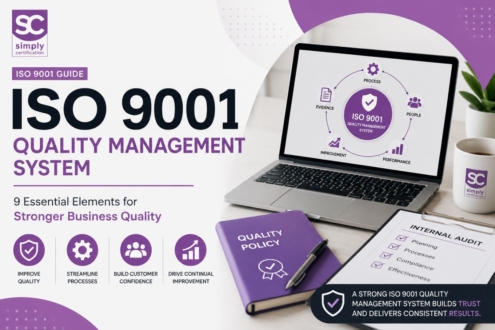
ISO 9001 Quality Management System: 9 Essential Elements Explained

An ISO 9001 quality management system gives an organisation a structured way to manage quality, maintain consistency and evidence how key processes are controlled.

For many businesses, parts of a quality management system may already exist. You may already keep customer records, use checklists, review suppliers, manage complaints, complete internal checks or monitor performance. The purpose of a QMS is to bring these activities together into a clear, controlled and reviewable system.

ISO 9001 is the internationally recognised standard that sets out requirements for quality management systems. Certification to this standard involves an independent assessment of whether an organisation’s system meets the relevant requirements and is being applied in practice.

This guide explains what an ISO 9001 quality management system is, what it commonly includes and what organisations may want to consider before applying for certification.

Simply Certification is a UKAS-accredited certification body providing independent and impartial certification assessment services.

If you would like to better understand your current position before applying for certification, you can complete our ISO 9001 readiness questionnaire here: ISO 9001 – Self Assessment

Please note: the questionnaire is for general readiness awareness only. It does not replace a formal certification assessment and does not confirm whether certification will be awarded.

What is an ISO 9001 quality management system?

An ISO 9001 quality management system is the framework an organisation uses to manage quality across its activities, people, processes, records and improvement actions.

A quality management system is often shortened to QMS.

In practical terms, a QMS helps an organisation answer questions such as:

  • What does the customer require?
  • Who is responsible for each key activity?
  • How is work planned, delivered and checked?
  • What records are kept?
  • How are issues reviewed?
  • How are corrective actions recorded?
  • How does the organisation monitor performance?
  • How are improvements considered over time?

The system should reflect how the organisation actually works. It should not be paperwork created only for an audit. A useful QMS is one that can be understood, followed and evidenced by the people using it.

Why does a quality management system matter?

A quality management system matters because it helps organisations manage quality in a consistent and controlled way.

Without a clear system, quality can depend too much on individual knowledge or informal habits. This can make it harder to maintain consistency as the organisation grows, takes on more work, changes staff or works with more complex customer requirements.

A clear QMS can help an organisation keep better control of:

  • Customer requirements
  • Process responsibilities
  • Documented information
  • Supplier activity
  • Training and competence records
  • Complaints and feedback
  • Non-conformities
  • Corrective actions
  • Internal audits
  • Management review
  • Continual improvement

For organisations working in construction, retrofit, renewables, manufacturing, facilities management or public sector supply chains, quality management can also be important when demonstrating capability to customers, contractors or procurement teams.

An ISO 9001 quality management system can provide a recognised framework for managing and evidencing these activities.

A well-maintained ISO 9001 quality management system can also make it easier for an organisation to demonstrate how quality is controlled. This can be useful when customers, contractors or procurement teams ask for evidence of a structured approach to quality management.

Is a QMS the same as ISO 9001?

No. A QMS and ISO 9001 are closely connected, but they are not exactly the same thing.

A QMS is the organisation’s own system for managing quality.

ISO 9001 is the standard that sets out requirements a quality management system can be assessed against.

This means an organisation may already have quality processes in place before certification. The certification assessment looks at whether the management system meets the requirements of the standard and whether it is being implemented effectively.

The 9 essential elements of an ISO 9001 quality management system

Every organisation is different, so the structure of a QMS will vary depending on size, sector, activities and complexity.

However, many systems include the following essential elements.

1. Scope of the quality management system

The scope explains what the quality management system covers.

This may include the organisation’s services, products, locations, departments, activities or operational boundaries.

For example, a contractor may define a scope that includes project management, procurement, installation, inspection and customer handover. A service provider may define a scope around service delivery, customer support and contract management.

A clear scope helps everyone understand what is included in the system.

It also supports the certification assessment because the auditor can see which parts of the organisation are being assessed.

When reviewing scope, organisations may need to consider:

  • What services or products are included
  • Which locations are included
  • Which departments or teams are included
  • Whether any requirements are not applicable
  • How the scope reflects customer and regulatory expectations

The scope should be clear, accurate and suitable for the organisation’s activities.

2. Quality policy

The quality policy sets out the organisation’s commitment to quality.

It should be relevant to the business and written in a way that can be understood by the people who need to use it.

A quality policy often refers to areas such as:

  • Meeting customer requirements
  • Meeting applicable requirements
  • Maintaining effective processes
  • Supporting continual improvement
  • Reviewing quality objectives
  • Ensuring responsibilities are understood

The policy should not be treated as a document that is created once and forgotten. It should be communicated and reviewed where appropriate.

A good quality policy is usually clear, practical and connected to how the organisation operates.

3. Quality objectives

Quality objectives help an organisation measure whether its quality management system is working.

Objectives should be relevant to the organisation and capable of being monitored.

Examples may include:

  • Improving customer satisfaction scores
  • Reducing repeat complaints
  • Improving on-time completion of records
  • Completing internal audits as planned
  • Reducing repeated non-conformities
  • Improving supplier performance
  • Improving response times
  • Reducing rework

Objectives should not be chosen only because they sound good. They should provide useful information about quality performance.

Organisations should also consider how objectives are reviewed, who is responsible for monitoring them and what evidence is retained.

4. Process map

A process map shows how work moves through the organisation.

This is often one of the most helpful parts of a quality management system because it shows how different activities connect.

For example, a business may have processes for:

  • Enquiry handling
  • Quoting
  • Contract review
  • Project planning
  • Purchasing
  • Supplier approval
  • Delivery or installation
  • Quality checks
  • Customer handover
  • Customer feedback
  • Complaints
  • Corrective action

A process map helps identify where information enters the business, how work is controlled and what evidence is created.

It can also help staff understand how their role affects the wider system.

The process approach is important because quality is rarely controlled by one single task. It is usually the result of several connected activities working together.

5. Roles and responsibilities

A QMS should make responsibilities clear.

People involved in key processes should understand what they are responsible for, what records they need to complete and when issues need to be escalated.

This does not mean every organisation needs complex documentation. For smaller businesses, a simple responsibility matrix may be enough. For larger organisations, responsibilities may be shown through job descriptions, procedures, organisation charts or process documents.

Responsibilities may include:

  • Approving documents
  • Reviewing customer requirements
  • Managing supplier approval
  • Checking completed work
  • Recording customer feedback
  • Reviewing complaints
  • Completing internal audits
  • Managing corrective actions
  • Reviewing quality performance

Clear responsibilities help reduce missed tasks, duplicated work and confusion.

They also provide useful evidence that the system is understood and controlled.

6. Documented information

Documented information includes the documents and records needed to support the QMS.

Documents explain what should happen.

Records show what has happened.

For example, a procedure may explain how supplier approval works. A completed supplier review form is a record showing that the process has been followed.

Common documented information may include:

  • Scope statement
  • Quality policy
  • Quality objectives
  • Process map
  • Procedures or process notes
  • Forms and templates
  • Training records
  • Supplier records
  • Customer feedback records
  • Complaint records
  • Internal audit records
  • Management review records
  • Corrective action records

Documented information should be controlled so that people know which version is current, where information is stored and how records are retained.

Poor document control can create problems if staff use old templates, records are incomplete or evidence cannot be found when needed.

7. Risk and opportunity management

An ISO 9001 quality management system includes risk-based thinking.

This means considering what could affect the organisation’s ability to deliver quality and meet requirements.

Risks may include:

  • Customer requirements being misunderstood
  • Documents being out of date
  • Records not being completed
  • Staff not being trained
  • Suppliers missing deadlines
  • Equipment not being maintained
  • Project changes not being communicated
  • Complaints not being reviewed
  • Corrective actions not being completed

Risk-based thinking does not mean removing every possible risk. It means identifying relevant risks and considering appropriate controls.

The system should also consider opportunities. These may include ways to improve communication, simplify processes, strengthen records, improve supplier monitoring or enhance customer feedback.

The level of detail should be proportionate to the organisation.

8. Internal audits

Internal audits are used to check whether the quality management system is being followed and whether it meets relevant requirements.

An internal audit may review areas such as:

  • Process control
  • Documented information
  • Customer requirements
  • Supplier management
  • Complaint handling
  • Non-conformities
  • Corrective actions
  • Quality objectives
  • Previous audit findings

Internal audits should be planned, carried out and recorded.

If findings are raised, the organisation should review them and take appropriate action.

A useful internal audit is not about blame. It is a way of checking the system, identifying evidence and supporting continual improvement.

Internal audit records are also important during certification assessment because they help show that the organisation is reviewing its own system.

9. Management review and continual improvement

Management review is where leadership reviews the performance of the quality management system.

This is important because quality should be connected to how the organisation is managed, not treated as a separate administration task.

A management review may include:

  • Quality objectives
  • Audit results
  • Customer feedback
  • Complaints
  • Non-conformities
  • Corrective actions
  • Supplier performance
  • Process performance
  • Risks and opportunities
  • Resource needs
  • Improvement actions

The purpose is to review whether the system remains suitable, adequate and effective.

Continual improvement is also a key part of ISO 9001. This means using evidence to consider where the system can be improved.

Improvements may be small or large. They could include updating a checklist, improving record storage, clarifying a responsibility, changing a supplier review process or improving how customer feedback is recorded.

What happens during certification assessment?

Certification to ISO 9001 involves an independent assessment of the organisation’s quality management system.

The assessment considers whether the system meets the requirements of the standard and whether it is being applied in practice.

A certification assessment may include reviewing documented information, sampling records, speaking with relevant personnel and checking how processes are controlled.

Certification is not awarded automatically. It can only be awarded following a successful assessment against the relevant requirements.

Simply Certification provides independent and impartial certification assessment services as a UKAS-accredited certification body.

During assessment, the auditor will review whether the ISO 9001 quality management system meets the requirements of the standard and whether it is being applied in practice. Certification is only awarded following a successful independent assessment. A readiness questionnaire can help an organisation reflect on its current position, but it does not replace formal certification assessment.

What is UKAS-accredited certification?

UKAS is the UK’s National Accreditation Body.

A UKAS-accredited certification body has been assessed for competence to provide certification services within its accredited scope.

It is important to use the wording correctly:

  • An organisation is certified to ISO 9001.
  • A certification body is accredited by UKAS.

This distinction matters because ISO develops standards but does not certify organisations itself.

Many customers, procurement teams and supply chain partners look for certification from a UKAS-accredited certification body because it provides additional confidence in the certification process.

UKAS-accredited management system certificates can also be checked through UKAS CertCheck.

What documents may be reviewed?

The documents and records reviewed during assessment will depend on the organisation, scope and activities.

However, common examples include:

  • QMS scope
  • Quality policy
  • Quality objectives
  • Process map
  • Risk and opportunity information
  • Document control records
  • Training and competence records
  • Supplier records
  • Customer feedback records
  • Complaint records
  • Non-conformance records
  • Corrective action records
  • Internal audit programme
  • Internal audit reports
  • Management review records

The assessment is evidence-based. This means the organisation should be able to show that processes are not only documented, but also being followed.

Readiness questions to consider

Before applying for certification, organisations may find it helpful to reflect on their current position.

Questions to consider include:

  • Is the scope of the QMS clearly defined?
  • Is the quality policy current and relevant?
  • Are quality objectives in place and reviewed?
  • Are key processes mapped or clearly described?
  • Are roles and responsibilities understood?
  • Are documents and records controlled?
  • Are risks and opportunities considered?
  • Are internal audits planned and recorded?
  • Has management review been completed?
  • Are corrective actions recorded and followed up?
  • Is there evidence that the system is being used in practice?

These questions are not a substitute for formal assessment. They can, however, help organisations understand whether they have key evidence in place before applying.

ISO 9001 quality management system checklist

Use this checklist as a simple self-check.

You may want to review whether your organisation has:

  • A defined QMS scope
  • A quality policy
  • Quality objectives
  • A process map
  • Clear responsibilities
  • Controlled documents
  • Organised records
  • Risk and opportunity information
  • Supplier monitoring records
  • Training and competence records
  • Customer feedback records
  • Complaint records
  • Non-conformance records
  • Corrective action records
  • Internal audit evidence
  • Management review records
  • Improvement actions

If several areas are unclear, the organisation may need to review its current system before applying for certification.

Frequently asked questions

What is an ISO 9001 quality management system?

An ISO 9001 quality management system is a structured framework used to manage quality. It includes processes, responsibilities, documents, records, monitoring and improvement activities.

Is a QMS the same as certification?

No. A QMS is the organisation’s own system for managing quality. Certification is the independent assessment of that system against the requirements of ISO 9001.

Does ISO certify organisations?

No. ISO develops international standards. Certification is carried out by independent certification bodies.

What does UKAS-accredited certification mean?

UKAS-accredited certification means the certification body has been assessed by UKAS for competence within its accredited scope. The organisation is certified to ISO 9001, while the certification body is accredited by UKAS.

Can a small business have a quality management system?

Yes. A QMS should be proportionate to the size and complexity of the organisation. Smaller businesses can have a simpler system, provided it is controlled, understood and evidenced.

What is the first step before applying for certification?

A useful first step is to review the organisation’s current position. This can include checking whether scope, processes, responsibilities, records, internal audits and management review evidence are in place.

Understand your current readiness position

An ISO 9001 quality management system can help an organisation manage quality, evidence key processes and support continual improvement.

Before applying for certification, it may be helpful to understand your current position.

Complete our ISO 9001 readiness questionnaire here: ISO 9001 – Self Assessment

ISO 9001 compliance is often used to describe how closely an organisation’s quality management system aligns with the requirements of ISO 9001.

For many businesses, this means having clear processes, controlled documents, organised records, defined responsibilities, internal audits, management review and evidence of continual improvement.

It is important to use the term carefully. ISO 9001 compliance does not mean a business is automatically certified. Certification can only be awarded following a successful independent assessment against the relevant requirements.

This guide explains what ISO 9001 compliance means, how it links to certification, and the key areas organisations may want to review before applying.

Simply Certification is a UKAS-accredited certification body providing independent and impartial certification assessment services.

If you would like to better understand your current position before applying for ISO 9001 certification, complete our readiness questionnaire here: ISO 9001 – Self Assessment

Please note: the questionnaire is a general self-check only. It does not provide consultancy, does not replace formal certification assessment and does not confirm whether certification will be awarded.

What does ISO 9001 compliance mean?

ISO 9001 compliance means that an organisation has considered the requirements of ISO 9001 and can show how its quality management system addresses those requirements.

In simple terms, it means the organisation can evidence how it manages quality.

This may include how it:

  • Understands customer requirements
  • Controls key processes
  • Manages documented information
  • Defines responsibilities
  • Reviews risks and opportunities
  • Monitors performance
  • Handles complaints and non-conformities
  • Completes internal audits
  • Carries out management review
  • Supports continual improvement

ISO 9001 compliance should be based on evidence. It is not enough to have documents in place if the system is not being used in practice.

For certification, an independent assessment looks at whether the quality management system meets the requirements of ISO 9001 and whether it is being applied effectively.

You can learn more about ISO 9001 here: ISO 9001 Certification | Demonstrate a commitment to quality

ISO 9001 compliance and certification: what is the difference?

ISO 9001 compliance and ISO 9001 certification are connected, but they are not the same.

Compliance is often used to describe an organisation’s alignment with the requirements of the standard.

Certification is the outcome of a successful independent assessment by a certification body.

An organisation may believe its system is compliant, but certification can only be confirmed after an assessment has been completed and the relevant requirements have been met.

It is also important to understand that ISO itself does not certify organisations. Certification is carried out by independent certification bodies.

Simply Certification is a UKAS-accredited certification body. This means we provide independent and impartial certification assessment services within our accredited scope.

Why ISO 9001 compliance matters

ISO 9001 compliance matters because it helps organisations take a structured approach to quality management.

Without a clear system, quality can depend too heavily on informal knowledge or individual habits. This can create gaps when staff change, work increases, customer requirements become more complex or more evidence is requested.

A quality management system aligned with ISO 9001 can help an organisation demonstrate how quality is managed across key areas of the business.

This may support:

  • More consistent processes
  • Better control of documents and records
  • Clearer roles and responsibilities
  • Stronger customer confidence
  • More structured handling of issues
  • Better internal review
  • Evidence of continual improvement

For organisations working with contractors, procurement teams, framework providers or larger supply chains, ISO 9001 certification may also be requested as evidence of a recognised quality management system.

7 essen tial areas to review for ISO 9001 compliance

Every organisation is different, so the level of detail needed will depend on size, sector, activities and scope.

However, the following areas are commonly reviewed when considering ISO 9001 compliance.

1. Scope of the quality management system

The scope explains what the quality management system covers.

This may include the organisation’s services, products, locations, departments or activities. A clear scope helps define what is included in the system and what will be assessed during certification.

When reviewing scope, organisations may want to consider:

  • Which services or products are included
  • Which locations are included
  • Which teams or departments are included
  • Whether any requirements are not applicable
  • Whether the scope reflects actual activities
  • Whether the scope is clear to customers and interested parties

A vague or inaccurate scope can make assessment more difficult because the boundaries of the system may not be clear.

A suitable scope should reflect what the organisation actually does.

2. Quality policy and objectives

A quality policy sets out the organisation’s commitment to quality.

It should be relevant to the business, understood by relevant people and reviewed where appropriate.

Quality objectives help turn that commitment into measurable activity. They should provide useful information about whether the quality management system is performing as intended.

Examples of quality objectives may include:

  • Improving customer satisfaction
  • Reducing repeat complaints
  • Completing internal audits as planned
  • Improving on-time completion of records
  • Reducing repeated non-conformities
  • Improving supplier performance
  • Improving response times

For ISO 9001 compliance, organisations should be able to show that quality objectives are not just written down, but also monitored and reviewed.

The key question is whether the policy and objectives support the way the organisation manages quality in practice.

3. Process control

ISO 9001 places strong emphasis on the process approach.

This means understanding how work moves through the organisation and how different activities connect.

Processes may include:

  • Enquiry handling
  • Contract review
  • Project planning
  • Purchasing
  • Service delivery
  • Production or installation
  • Customer communication
  • Inspection and checking
  • Complaint handling
  • Corrective action
  • Internal audit
  • Management review

For ISO 9001 compliance, an organisation should be able to show how key processes are controlled.

This may include identifying who is responsible, what information is needed, what records are created and how performance is monitored.

Process control should be practical. The aim is not to create unnecessary paperwork, but to make sure the organisation can evidence how work is managed.

4. Documented information

Documented information includes the documents and records needed to support the quality management system.

Documents explain what should happen.

Records show what has happened.

For example, a procedure may explain how customer complaints are handled. A completed complaint log and corrective action record can show how the process was followed.

For ISO 9001 compliance, documented information should be controlled. This means people should know:

  • Which version of a document is current
  • Where documents are stored
  • Who can approve changes
  • What records need to be retained
  • How records are protected
  • How long records should be kept

Poor document control can create problems if staff use outdated templates, records are incomplete or evidence cannot be found.

The system should be clear enough for people to use and reliable enough to support assessment.

5. Risk and opportunity management

Risk-based thinking is an important part of ISO 9001.

Organisations should consider what could affect their ability to meet requirements and deliver consistent quality.

Risks may include:

  • Customer requirements being misunderstood
  • Records not being completed
  • Documents being out of date
  • Staff not being trained
  • Suppliers missing deadlines
  • Equipment not being available
  • Complaints not being reviewed
  • Corrective actions not being followed up

Opportunities may include:

  • Improving customer communication
  • Simplifying a process
  • Updating forms or records
  • Improving supplier review
  • Strengthening staff training
  • Improving internal audit planning
  • Improving how lessons learned are captured

ISO 9001 compliance does not require every risk to disappear. It requires the organisation to consider relevant risks and opportunities and take suitable action where needed.

The level of detail should be proportionate to the organisation.

6. Internal audits and corrective actions

Internal audits are used to check whether the quality management system is working.

They help the organisation review whether processes are being followed, whether records are complete and whether the system meets relevant requirements.

An internal audit may review:

  • Process control
  • Customer requirements
  • Documented information
  • Supplier records
  • Complaints
  • Non-conformities
  • Corrective actions
  • Quality objectives
  • Management review
  • Previous audit findings

If findings are raised, the organisation should consider appropriate action.

Corrective action is used when something has gone wrong or a non-conformity has been identified. It should focus on understanding the issue and reducing the chance of it happening again.

For ISO 9001 compliance, organisations should be able to evidence that internal audits are planned, completed and followed up.

7. Management review and continual improvement

Management review is where leadership reviews the performance of the quality management system.

This is important because quality should be connected to how the organisation is managed. It should not be treated as a separate administration task.

Management review may include:

  • Quality objectives
  • Customer feedback
  • Complaints
  • Non-conformities
  • Corrective actions
  • Internal audit results
  • Supplier performance
  • Process performance
  • Risks and opportunities
  • Resource needs
  • Improvement actions

Continual improvement is also a key part of ISO 9001 compliance.

Improvement does not always mean large changes. It may involve updating a checklist, improving record storage, reviewing a supplier process, clarifying a responsibility or making customer communication clearer.

The important point is that improvement should be considered, recorded and reviewed where relevant.

ISO 9001 compliance checklist

Use this general checklist to review your current position.

Your organisation may want to consider whether it has:

  • A defined quality management system scope
  • A relevant quality policy
  • Quality objectives that are monitored
  • A process map or process descriptions
  • Clear roles and responsibilities
  • Controlled documents
  • Organised records
  • Risk and opportunity information
  • Supplier controls where relevant
  • Training and competence records
  • Customer feedback records
  • Complaint records
  • Non-conformance records
  • Corrective action records
  • Internal audit evidence
  • Management review records
  • Continual improvement actions

If several areas are unclear, the organisation may need to review its current system before applying for certification.

This checklist is for general awareness only and does not replace formal certification assessment.

What happens during ISO 9001 certification assessment?

During ISO 9001 certification assessment, an auditor reviews whether the organisation’s quality management system meets the requirements of the standard and whether it is being applied in practice.

The assessment may include reviewing documents, sampling records, speaking with relevant personnel and checking how processes are controlled.

Evidence may include:

  • Quality policy
  • Quality objectives
  • Process records
  • Training records
  • Supplier records
  • Customer feedback
  • Complaint records
  • Non-conformance records
  • Corrective actions
  • Internal audit records
  • Management review records
  • Improvement actions

Certification is not automatic. It can only be awarded following a successful assessment against the relevant requirements.

A readiness questionnaire may help an organisation reflect on its current position, but it does not replace formal certification assessment.

UKAS-accredited ISO 9001 certification

UKAS is the UK’s National Accreditation Body.

A UKAS-accredited certification body has been assessed by UKAS for competence to provide certification services within its accredited scope.

It is important to use the wording correctly:

  • An organisation is certified to ISO 9001.
  • A certification body is accredited by UKAS.

Simply Certification is a UKAS-accredited certification body providing independent and impartial certification assessment services.

UKAS-accredited management system certificates can be verified through UKAS CertCheck.

Common ISO 9001 compliance mistakes

Organisations preparing for certification may want to be aware of common issues that can affect readiness.

These may include:

  • Scope not being clearly defined
  • Quality objectives not being monitored
  • Processes not reflecting actual practice
  • Documents not being controlled
  • Records being incomplete or difficult to find
  • Internal audits not being completed
  • Corrective actions not being followed up
  • Management review not being evidenced
  • Responsibilities being unclear
  • Improvement actions not being recorded

These points do not automatically mean certification cannot be achieved. They are simply areas organisations may want to review before applying for assessment.

Does ISO 9001 compliance mean legal compliance?

No. ISO 9001 compliance should not be confused with legal compliance.

ISO 9001 is a quality management system standard. It focuses on how an organisation manages quality, customer requirements, processes, records, internal audits, management review and continual improvement.

It does not replace legal, regulatory, contractual or sector-specific obligations.

Organisations still need to understand and meet the applicable requirements relevant to their activities.

This distinction is important because ISO 9001 certification should not be presented as proof that an organisation complies with every legal or regulatory requirement.

Frequently asked questions

What is ISO 9001 compliance?

ISO 9001 compliance means an organisation has considered the requirements of ISO 9001 and can evidence how its quality management system aligns with those requirements.

Is ISO 9001 compliance the same as certification?

No. Compliance is often used to describe alignment with the standard. Certification is only awarded following a successful independent assessment by a certification body.

Does ISO certify organisations?

No. ISO develops international standards but does not certify organisations. Certification is carried out by independent certification bodies.

What evidence is needed for ISO 9001 compliance?

Evidence may include quality policy, objectives, process records, training records, supplier records, customer feedback, complaints, non-conformities, corrective actions, internal audits and management review records.

Is ISO 9001 a legal compliance standard?

No. ISO 9001 is a quality management system standard. It does not replace legal, regulatory, contractual or sector-specific requirements.

Can a small business be ISO 9001 compliant?

Yes. A small business can have a quality management system aligned with ISO 9001. The system should be proportionate to the size, scope and complexity of the organisation.

What is the first step before applying for certification?

A useful first step is to review the current quality management system and consider whether key processes, records, internal audits and management review evidence are in place.

Understand your current readiness position

ISO 9001 compliance starts with understanding whether your quality management system is clear, controlled and supported by evidence.

Before applying for certification, it may be useful to reflect on your current position.

Complete our ISO 9001 readiness questionnaire here: ISO 9001 – Self Assessment

This questionnaire is intended as a general self-check only. It does not provide consultancy, does not replace formal certification assessment and does not guarantee any certification outcome.

Simply Certification is a UKAS-accredited certification body providing independent and impartial certification assessment services.

You can also learn more about ISO 9001 here: ISO 9001 Certification | Demonstrate a commitment to quality
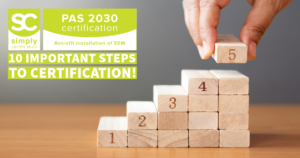
ISO 9001: 7 Powerful Benefits for Better Business Quality

ISO 9001 is the world’s best-known quality management standard. It gives businesses a clear way to improve how work is planned, delivered, checked and improved.

For many organisations, ISO 9001 is also a useful way to show customers, contractors and supply chain partners that quality is being managed properly. A strong quality management system helps your team work consistently, keep better records, reduce avoidable errors and respond to issues before they become bigger problems.

This ISO 9001 guide explains what the standard is, why it matters, what certification involves and how to understand whether your business is ready.

Before you start the full ISO 9001 certification journey, the best first step is a simple readiness check. Complete our questionnaire here: ISO 9001 – Self Assessment

What is ISO 9001?

ISO 9001 is an international standard for quality management systems. A quality management system, often called a QMS, is the way your business manages quality across its services, products, people, processes and records.

ISO 9001 does not tell every business to work in the same way. Instead, it sets out requirements that help organisations build a system that is suitable for their size, sector and activities.

In practice, this means having a clear structure for how you:

  • Understand customer requirements
  • Plan and control your work
  • Manage roles and responsibilities
  • Keep documents and records organised
  • Monitor performance
  • Handle complaints or problems
  • Take corrective action
  • Review results
  • Improve over time

The aim of ISO 9001 is not to create paperwork for the sake of it. The aim is to create a practical system that supports the business and gives customers confidence.

You can also read the official ISO overview of the standard here: official ISO guidance.

Why quality management matters

Every business wants to deliver a good service, and ISO 9001 gives that aim a clear structure. The challenge is doing that consistently, especially as the team grows, projects become more complex or customer expectations increase.

Without a clear management system, quality can depend too heavily on individual habits. One person may follow a process carefully, while another may do things differently. Records may be saved in different places. Customer feedback may not be reviewed. Issues may be fixed quickly but never investigated properly.

A QMS helps bring everything together. It makes your approach clearer, more consistent and easier to evidence.

This is especially important for businesses that work in construction, retrofit, renewables, manufacturing, facilities management, engineering or public sector supply chains. In these sectors, customers often need proof that a company can deliver safely, professionally and consistently.

7 powerful benefits of certification

1. Stronger customer confidence

ISO 9001 certification shows that your organisation has been independently assessed against a recognised standard.

For customers, this can be reassuring. It shows that your business has structured processes in place and is committed to managing quality properly.

It can also support conversations with larger clients, main contractors, housing providers, local authorities and procurement teams.

2. Better internal processes

A good ISO 9001 management system helps your team understand how work should be carried out.

This can include how enquiries are handled, how quotes are checked, how projects are planned, how suppliers are reviewed and how customer feedback is recorded.

When these processes are clear, the business becomes easier to manage. It also becomes easier to train new staff and maintain consistency across different teams or locations.

3. Fewer avoidable mistakes

Mistakes are often caused by unclear processes, missing records, poor communication or lack of responsibility.

ISO 9001 helps businesses identify where things could go wrong and put sensible controls in place.

This does not mean mistakes will never happen. It means your business has a clear way to prevent issues, respond to them and learn from them.

4. Improved tender opportunities

Many tenders, frameworks and approved supplier lists ask businesses to show evidence of quality management.

Having ISO 9001 certification can strengthen your position because it gives procurement teams a recognised form of assurance.

For contractors and installers, this can be particularly valuable when applying for larger projects or working with organisations that need documented quality controls.

5. Clearer roles and responsibilities

A quality system should make it clear who is responsible for key activities.

This helps reduce confusion, missed tasks and duplicated work. It also supports accountability because people understand what is expected and what records need to be kept.

6. Better performance monitoring

Good quality management is based on evidence.

This can include customer satisfaction, audit findings, complaints, non-conformities, supplier performance, training records and management review actions.

When this information is reviewed regularly, leaders can make better decisions and focus on the areas that need improvement.

7. Continual improvement

One of the most valuable parts of ISO 9001 is continual improvement.

This means reviewing what is working, identifying what is not and making practical changes. Improvements do not always have to be major projects. Small changes to templates, handovers, communication or record keeping can make a big difference over time.

Who is ISO 9001 suitable for?

ISO 9001 can be used by organisations of different sizes and sectors. It is suitable for small businesses, growing teams, established contractors and larger organisations with multiple sites.

It is commonly used by:

  • Construction companies
  • Contractors and subcontractors
  • Retrofit businesses
  • Renewable energy installers
  • Manufacturers
  • Engineering firms
  • Facilities management providers
  • Consultants
  • Service companies
  • Public sector suppliers

For smaller businesses, the system should be proportionate. You do not need to create a complicated structure if your work is simple. The key is to have a clear, controlled and useful way of managing quality.

What does a quality management system include?

A practical QMS usually includes a mix of policies, processes, responsibilities and records.

Typical ISO 9001 areas include:

  • Quality policy
  • Quality objectives
  • Scope of the system
  • Process map
  • Risk and opportunity register
  • Document control
  • Staff competence and training records
  • Supplier approval and review
  • Customer feedback
  • Complaint handling
  • Non-conformance records
  • Corrective actions
  • Internal audit programme
  • Management review records

The exact documents needed will depend on your business. A small installer will not need the same level of complexity as a large contractor with several departments and sites.

The most important question is whether the system helps your team do the right things consistently.

How the ISO 9001 process approach works

The process approach is a central idea in quality management.

It means looking at your business as a set of connected activities. Each process has inputs, outputs, responsibilities and controls.

For example, a contractor might have processes for enquiry handling, quoting, order acceptance, project planning, purchasing, site delivery, inspection, handover and customer care.

When these processes are mapped clearly, it becomes easier to see how work moves through the business. It also helps identify risks, delays, gaps and opportunities for improvement.

This approach can be especially helpful when different people or teams are involved in delivering the same outcome.

What is risk-based thinking?

Risk-based thinking means looking ahead and asking what could affect your ability to deliver quality.

Common risks include:

  • Customer requirements being misunderstood
  • Staff not being trained
  • Suppliers missing deadlines
  • Documents being out of date
  • Records not being completed
  • Equipment not being maintained
  • Complaints not being reviewed
  • Project changes not being communicated

ISO 9001 does not expect every risk to disappear. It expects your organisation to understand the important risks and take sensible action.

It also asks businesses to think about opportunities. This might include improving communication, reducing waste, simplifying processes, using better software or improving customer updates.

What happens during ISO 9001 certification?

ISO 9001 certification normally involves an independent audit of your management system.

The ISO 9001 audit checks whether your system meets the requirements and whether it is being followed in practice.

There are usually two main stages.

Stage 1 audit

The first stage checks whether your business is ready for the full assessment. The auditor usually reviews your documented information, scope, processes and general preparedness.

If there are major gaps, these need to be addressed before moving to the next stage.

Stage 2 audit

The second stage is a more detailed review. The auditor looks for evidence that your system is working.

They may review records, ask questions, check processes and look at how issues are managed.

If the system meets the requirements, certification can be recommended.

After this, surveillance audits are carried out to check that the system continues to be maintained. A recertification audit is normally required later in the certification cycle.

What is UKAS accredited certification?

In the UK, many organisations look for ISO 9001 certification from a UKAS accredited certification body.

UKAS is the UK’s National Accreditation Body. Its role is to assess organisations that provide services such as certification, testing and inspection.

This matters because it gives customers more confidence that the certification body has been independently assessed.

You can verify accredited management system certificates through UKAS CertCheck.

When talking about this, it is important to use the right wording. A business is certified to the standard. The certification body is accredited by UKAS.

How long does ISO 9001 take?

The timescale depends on how prepared your business already is.

You may move more quickly if you already have clear processes, records, internal audits and management reviews in place.

It may take longer if you need to build the system from the beginning, train staff, organise documents or collect evidence.

The best way to estimate your next steps is to complete a readiness review. This helps identify what is already in place and what needs work before an external audit.

ISO 9001 readiness checklist

Use this ISO 9001 checklist to understand whether your business may be close to certification.

Do you have:

  • A quality policy?
  • Clear quality objectives?
  • A defined scope?
  • A process map?
  • Controlled documents and records?
  • A risk and opportunity register?
  • Training and competence records?
  • Supplier controls?
  • Customer feedback records?
  • Complaint records?
  • Non-conformance records?
  • Corrective action records?
  • Internal audit evidence?
  • Management review records?
  • A clear plan for continual improvement?

If you are unsure about several of these points, your business may need more preparation.

Complete our readiness questionnaire here: ISO 9001 – Self Assessment

Common mistakes to avoid

Many businesses make the process harder than it needs to be.

The most common mistakes include:

  • Creating documents that are too complicated
  • Copying templates that do not match the business
  • Leaving the system to one person
  • Not involving senior management
  • Forgetting to complete internal audits
  • Not recording corrective actions properly
  • Treating certification as a one-off task
  • Waiting until the audit to fix known issues

A strong system should be simple enough for your team to use and strong enough to give confidence during an audit.

Is ISO 9001 changing?

ISO 9001:2015 is currently the published version, with a revised edition expected in 2026.

For businesses already working towards certification, the best approach is to focus on strong foundations. Clear processes, risk management, internal audits, management reviews and continual improvement will remain important.

If changes affect your system, these can be reviewed as part of your ongoing improvement and transition planning.

Frequently asked questions

What does ISO 9001 mean?

ISO 9001 is the international standard for quality management systems. It helps organisations show that they have clear processes for meeting customer, legal and regulatory requirements.

Is certification mandatory?

It is not mandatory for every business. However, it may be requested by customers, contractors, frameworks, supply chains or tender opportunities.

Can small businesses get certified?

Yes. The standard can be applied to small businesses as long as the system is suitable for the size and complexity of the organisation.

Is ISO 9001 useful for construction companies?

Yes. It can help construction companies improve project control, supplier management, records, customer satisfaction and tender readiness.

What is the first step?

The first step is to understand your current position. A readiness questionnaire can help you see whether your documents, processes and records are prepared for audit.

Ready to check your position?

A strong quality management system can help your business improve consistency, reduce errors, strengthen customer confidence and prepare for new opportunities.

You do not need to guess where you are up to. Our readiness questionnaire gives you a simple way to understand your current position and identify the next steps.

Complete the questionnaire today: ISO 9001 – Self Assessment


10 Important Steps to Certification: MCS

What are the 10 important steps to certification? If you’re a contractor or business that installs renewable energy technology and is looking to work on government-backed energy efficiency schemes in the UK, obtaining MCS certification is essential! MCS certification sets the standard for installing renewable energy technologies, ensuring quality, compliance, and customer confidence. However, the process can seem tricky without the right guidance.

In this blog, we’ll explain the 10 important steps to certification for MCS, from understanding the requirements to passing assessments and maintaining compliance. Whether you’re new to the process or seeking to refine your approach, this guide will help you navigate the certification journey with confidence.

First Things First…What is MCS Certification?

The Microgeneration Certification Scheme (MCS) is the UK’s nationally recognised quality standard for small-scale, renewable energy technologies. It ensures that both the products used and the installers who fit them meet rigorous performance, safety, and quality standards.

MCS certification applies to renewable technologies such as:

  • Solar Photovoltaics (PV)

  • Air and Ground Source Heat Pumps

  • Solar Thermal

  • Battery Storage

For installers, MCS certification isn’t just about credibility – it’s financial gateway. Homeowners and businesses can only access government-backed incentives (like the Smart Export Guarantee) if their system is installed by an MCS-certified installer using MCS-certified products.

Who provides MCS certification?

MCS certification is provided by UKAS-accredited certification bodies that assess businesses for compliance with the MCS standard. These organisations audit installers, ensuring they meet the required standards for quality, competence, and compliance. An example of a UKAS-accredited certification body is us – Simply Certification!

One difficult thing to decide is which certification body you should choose. Many different factors can influence your decision including:

  • Assessor availability
  • Customer service
  • The costs and fees involved
  • Reputation and track record
  • Expertise and experience

Choosing Simply Certification as your certification body for MCS has a whole host of benefits. Our team is made up of leading experts in MCS and we can answer your questions quickly. The service we provide is supportive and responsive – gaining certification can be a little daunting and we remove the fear factor. Take a look to see what one of our customers had to say:

“A very comprehensive and diligent process from start to finish. I would highly recommend Simply Certification and will feel assured when working with any companies who carry accreditation provided by them”.

Nebula Renewables Ltd

If you still cannot decide, don’t worry, we’ve got you covered! Just check out one of our previous blogs, 8 Things to look for when choosing a certification body.

What are the 10 Important Steps to Certification?

To achieve MCS certification, businesses must follow a structured process to ensure compliance with the standard. Below are our 10 important steps to certification:

#1 – Access Simply Hub 

We have a self service onboarding system, called Simply Hub. To start the process of certification with us, you will need access to this as the first step.

To access you need to register your interest and a link to access Simply Hub will be sent to you to start the application process.

#2 – A quotation will be issued within Simply Hub

Almost like a shopping basket, a quote in Simply Hub will be presented to you. You can amend the measures you wish to go for as many times as you wish. Once you are happy to proceed, just accept the quotation.

#3 – Pay the invoice and complete the contract documentation from PandaDocs

An invoice will be sent to you once your quotation has been accepted. Once you have paid the invoice you will be emailed the contract documentation via PandaDocs. Once this is completed you will receive an assessment Checklist.

#4 – Assessment Preparation and Checklist Update

You must prepare for your assessments, ensuring you have the required evidence available to present to us, showing compliance to the standards you have applied for. As we are a certification body, we are not allowed to support you in the preparation or advise you. To protect you from a high number of non conformances we ask that you complete the online checklist so you can be confident you are ready.

#5 – Assessment Plan and Bookings

Once we have received your completed checklist – our bookings team will be in touch with you we will then schedule your assessment with our assessors.

#6 – Head Office Assessment

This is currently conducted onsite, our assessor will spend a day with you to run through your documentation, processes and procedures to ensure they are all in line with the standard.

#7 – Technical Inspections

Our technical team will carry out an assessment on the measures you are applying for. These must be post for all measures.

#8 Verification and decision making

Once any non-conformances have been closed by the assessor, we will send your reports to an independent verifier who will ensure the standards have been met. Once the verifier is satisfied with the reports, an internal decision-maker will make final decision to grant certification.

#9 Certification granted

Once certification has been granted, we will send your certification pack via email. We will also send you marketing material to shout about your success.

#10 Maintaining certification

To maintain certification, you will be subject to ongoing surveillance to ensure ongoing compliance with the scheme requirements. You will be required to notify us of your installs so that we can carry out inspections throughout the duration of your certification.

Finally…

Achieving MCS certification is a crucial step for businesses looking to work on government-backed energy efficiency projects and major contracts. By following these 10 important steps to certification, you’ll not only ensure compliance with industry standards but also position your business for long-term success in the retrofit sector.

While the process may seem complex, the right preparation—such as developing a good Quality Management System (QMS) and choosing a reputable certification body—will make the journey smoother.

Now that you understand what it takes to become MCS certified and you know the 10 important steps to certification, it’s time to take the next step. Start by reviewing your processes, gathering the necessary documentation, and reaching out to a certification body to begin your application.

If you need further guidance, feel free to get in touch – we’re here to help!

We’re Officially UKAS Accredited for D2 Lighting Systems and Controls!

Simply Certification Secures UKAS Accreditation for D2 – Lighting Systems and Controls

We’re proud to announce that Simply Certification has officially achieved UKAS accreditation for D2, covering lighting fittings, lighting systems, and lighting system controls. This marks an exciting expansion of our certification services and reinforces our commitment to supporting the UK’s drive toward energy efficiency and net-zero targets by 2050.

As a certification body dedicated to simplifying the route to PAS 2030 compliance, this new accreditation means we can now offer fully UKAS-accredited certification to installers delivering energy-efficient lighting solutions, one of the most accessible and impactful measures in building retrofit projects.

What Does D2 – Lighting Cover?

The D2 measure under PAS 2030:2023 encompasses the design, installation, and commissioning of low-energy lighting systems and controls. This includes:

  • Upgrading outdated lighting fittings with high-efficiency LED technologies

  • Installing full lighting systems in domestic buildings

  • Integrating lighting controls, such as dimmers, motion sensors, timers, and smart systems, to optimise energy usage

These installations contribute significantly to reducing a building’s overall energy consumption and carbon emissions, while also enhancing usability, comfort, and long-term cost savings for occupants.

Why This Accreditation Matters…

Being UKAS-accredited means our certification services are independently verified to meet the highest standards of impartiality, competence, and consistency. It gives installers confidence that their PAS 2030 certification is:

  • Robust, credible, and widely recognised

  • Eligible for access to government-backed funding schemes like ECO4

  • Aligned with TrustMark requirements

Installers certified under a UKAS-accredited body like Simply Certification are in a stronger position to win contracts, meet funding criteria, and demonstrate high-quality standards to customers and partners.

Supporting Installers Through Every Step

Achieving PAS 2030 certification can seem like a complex process, especially with technical measures such as D2, which involves both electrical installations and smart control systems. That’s why our approach is built around making certification clear, supportive, and efficient.

Whether you’re a micro business, a growing SME, or an established contractor diversifying your offering, our process supports your business needs.

Why Now Is the Right Time for D2 Certification

With the UK Government’s focus on reducing building emissions and improving energy efficiency through initiatives such as ECO4 and SHDF the demand for competent and certified lighting system installers is growing rapidly.

D2 is a particularly attractive measure because:

  • Lighting upgrades are highly cost-effective and easy to implement

  • It’s a low-disruption option for homeowners and tenants

  • Smart lighting controls can deliver long-term energy savings

Becoming certified now ensures you’re well-positioned to access funded work, meet compliance requirements, and gain a competitive edge in the market.

Join the Growing Network of Certified Professionals

Our newly awarded UKAS accreditation for PAS 2030 under D2 expands the opportunities for installers and reflects our ongoing investment in helping tradespeople and businesses thrive in the retrofit space.

If you’re ready to take advantage of this growing market and want a certification body that’s responsive, clear, and genuinely supportive, Simply Certification is here to help.

Get Started Today!

📞Call: 0191 323 3960

📧Email: hello@simplycertification.co.uk

🌐Visit: www.simplycertification.co.uk

Let’s light up the future together!

10 Important Steps to Certification

What are the 10 important steps to certification? If you’re a contractor or business looking to work on government-backed energy efficiency schemes in the UK, obtaining PAS 2030 certification is essential! PAS 2030 certification sets the standard for installing energy-efficient measures, ensuring quality, compliance, and customer confidence. However, the process can seem tricky without the right guidance.

In this blog, we’ll explain the 10 important steps to certification for PAS 2030, from understanding the requirements to passing assessments and maintaining compliance. Whether you’re new to the process or looking to refine your approach, this guide will help you confidently navigate the certification journey.

First Things First…What is PAS 2030 Certification?

PAS 2030 Certification is a UK standard that sets out the requirements for businesses installing energy efficiency measures. The standard ensures that installations meet high-quality standards and are compliant with government-backed schemes like the Energy Company Obligation (ECO).

A few of the energy efficiency measures that PAS 2030 covers are:

  • B1 – Cavity Wall Insulation
  • B2 – Draught Proofing
  • B3 – Energy Efficient Glazing & Doors
  • B4 – External Wall Insulation
  • B5 – Flat Roof Insulation
  • B6 – Floor Insulation
  • B8 – Internal Wall Insulation
  • B9 – Loft Insulation
  • B10 – Pitched Roof Insulation
  • B12 – Room-in-Roof Insulation
  • C1 – Gas-fired Condensing Boilers
  • C5 – Heating Controls
  • D1 – Electric Storage Heaters

Since 2021, PAS 2030 must be used alongside PAS 2035, which sets the framework for whole house retrofit projects. This means that energy efficiency upgrades should be planned in a way that considers the entire building’s performance rather than just installing single measures in isolation.

Who provides PAS 2030 certification?

PAS 2030 certification is provided by UKAS-accredited certification bodies that assess businesses for compliance with the  PAS 2030 standard. These organisations audit installers, ensuring they meet the required standards for quality, competence, and compliance. An example of a UKAS-accredited certification body is us – Simply Certification!

One difficult thing to decide is which certification body you should choose. Many different factors can influence your decision including:

  • Assessor availability
  • Customer service
  • The costs and fees involved
  • Reputation and track record
  • Expertise and experience

Choosing Simply Certification as your certification body for PAS 2030 has a whole host of benefits. Our team is made up of leading experts in PAS 2030 and we can answer your questions quickly. The service we provide is supportive and responsive – gaining certification can be a little daunting and we remove the fear factor. Take a look to see what one of our customers had to say:

“We approached Simply Certification as we were disappointed with the service of the certification body that we had used for several years for our PAS 2030. What a stark contrast! From start to finish, I have found the team at Simply responsive, understanding and extremely helpful”.

BCS Render Systems Ltd

If you still cannot decide, don’t worry, we’ve got you covered! Just check out one of our previous blogs, 8 Things to look for when choosing a certification body.

What are the 10 Important Steps to Certification?

To achieve PAS 2030 certification, businesses must follow a structured process to ensure compliance with the standard. Below are our 10 important steps to certification:

#1 – Access Simply Hub 

We have a self service onboarding system, called Simply Hub. To start the process of certification with us, you will need access to this as the first step.

To access you need to register your interest and a link to access Simply Hub will be sent to you to start the application process.

#2 – A quotation will be issued within Simply Hub

Almost like a shopping basket, a quote in Simply Hub will be presented to you. You can amend the measures you wish to go for as many times as you wish. Once you are happy to proceed, just accept the quotation.

#3 – Pay the invoice and complete the contract documentation from PandaDocs

An invoice will be sent to you once your quotation has been accepted. Once you have paid the invoice you will be emailed the contract documentation via PandaDocs. Once this is completed you will receive an assessment Checklist.

#4 – Assessment Preparation and Checklist Update

You must prepare for your assessments, ensuring you have the required evidence available to present to us, showing compliance to the standards you have applied for. As we are a certification body, we are not allowed to support you in the preparation or advise you. To protect you from a high number of non conformances we ask that you complete the online checklist so you can be confident you are ready.

#5 – Assessment Plan and Bookings

Once we have received your completed checklist – our bookings team will be in touch with you we will then schedule your assessment with our assessors.

#6 – Head Office Assessment

Usually conducted remoted via Teams, our assessor will spend a day with you to run through your documentation, processes and procedures to ensure they are all in line with the standard.

#7 – Technical Inspections

Our technical team will carry out an assessment on the measures you are applying for. These must be pre, mid and post for most measures. If you don’t have any live PAS 2030 jobs available, we will work with you to look at certification through an alternative route.

#8 Verification and decision making

Once any non-conformances have been closed by the assessor, we will send your reports to an independent verifier who will ensure the standards have been met. Once the verifier is satisfied with the reports, an internal decision-maker will make final decision to grant certification.

#9 Certification granted

Once certification has been granted, we will send your certification pack via email. We will also send you marketing material to shout about your success.

#10 Maintaining certification

To maintain certification, you will be subject to ongoing surveillance to ensure ongoing compliance with the scheme requirements. You will be required to pre-notify us of your installs so that we can carry out inspections throughout the duration of your certification.

Finally…

Achieving PAS 2030 certification is a crucial step for businesses looking to work on government-backed energy efficiency projects and major contracts. By following these 10 important steps to certification, you’ll not only ensure compliance with industry standards but also position your business for long-term success in the retrofit sector.

While the process may seem complex, the right preparation—such as developing a good Quality Management System (QMS) and choosing a reputable certification body—will make the journey smoother.

Now that you understand what it takes to become PAS 2030 certified, it’s time to take the next step. Start by reviewing your processes, gathering the necessary documentation, and reaching out to a certification body to begin your application.

If you need further guidance, feel free to get in touch – we’re here to help!

PAS 2030 Case Study

The Need

Saviour Energy Solutions launched in 2014 and have been delivering the retrofit of energy efficiency measures under various funding schemes to help drive down fuel poverty.

Having gained PAS 2030:2017 around 5 years ago, Saviour continued on with their existing certification body.

As the business began to grow, they started to attract opportunities from a number of local authorities which required evidence of compliance to ISO 9001.

The Pain

After searching for an alternative certification body, they found Simply Certification who offered both PAS 2030 and ISO 9001.

Khawar Aziz , Saviour’s Director states;

“We were finding the lack of communication we were receiving from our provider at the time increasingly frustrating.

From the moment we got in touch with Simply we realised that this was a certification body that was much more in line with what we needed.

Not only did they offer management system certification they also offered PAS 2030.”

Khawar goes onto say;

“We were feeling let down with our other provider due to lack of responsiveness and compliance is vital to us so felt that we would also enlist the services of Simply for PAS 2030.”

The Outcome

“We have gained certification with Simply for PAS 2030 and the process was such a different experience to what we have had previously.

It was a nice experience working with Simply. Especially, Lyndsey whom I called and interacted during this whole process. She was always ready to help.

Communication is so important when providing a service such as certification and I felt that Simply excelled at this.

The assessments were invaluable to us by supporting with our continuous improvement and compliance.

We’re really looking forward to a continued relationship with Simply.”

Investing in a management system and certification has a huge range of benefits.

#1 Reduces risk of legal issues

Nine times out of ten, gaining and maintaining a healthy profit margin is a key objective of a businesses. Whether applicable to your business type or a wider requirement such as GDPR – staying compliant will reduce unnecessary waste of company profits having to pay out legal fees or fines. Standards such as ISO 27001  (Information Security Management) and ISO 45001 (Health and Safety) are a great way to embed a set of process that will protect your business and reduce any risk associated with non compliance of legislation.

#2 Future proof your business

If you look back, even just this last 12 months, you will have felt huge changes in our working environment. For the survival and success of your business, it is vital that it is managed in line with the current environment. There are a huge range of external factors that can impact the success of your organisation these could be political, environmental, social, economical, technological and legal, Having a management system in place that is constantly reviewing these factors ensures that your can put in place strategies to either take advantage of any changes or to proactively protect it, giving you a competitive advantage.

#3 Increases effectiveness and efficiencies

Standards such as ISO 9001 (Quality) enable a business to identify areas of improvement across it’s operations and be able to spot where there are better ways to carry out activities. The standard ensures regular reviewing of customer handling, supply chain appraisals and spotting and identifying risks to name but a few. All of these factors enable a business in continuously improve.

#4 Great material for marketing

When our clients gain certification one of the first things we provide them is with our marketing pack on how to shout about it – certification is something to celebrate!

Showcasing your business is built on firm foundations is a great selling point. Ask yourself, who would your potential buyers rather choose? A business that is structured and has formal processes in place that meet international standards… or a business that just wings it?

Being compliant demonstrates that you have high ethical standards and practices in place. What a great story to tell your stakeholders.

#5 Increases Trust and Confidence

Trust and confidence are huge factors when it comes to choosing a supplier and then continuing to stay with them.

By having in place management systems that proactively identify areas of risk so that they can be addressed, helps a business streamline their services so that the customer has less of a chance to experience an issue when dealing with your organisation – resulting in a higher customer life time value.

#6 Reduces employee churn

Engaged employees are less likely to have negative feelings towards their employer. If they feel that their contributions are valued, that they are safe in their roles and that who they work for is a responsible employer, the propensity for them to seek employment elsewhere, reduces significantly.

The cost of recruiting (time and budget) is extremely high. This can be avoided through having standards in place that encourage employee engagement.

Where do I start?

In the first instance you need to decide which are the most relevant standards for your business.

The most common standard is ISO 9001 (Quality), however more businesses are looking to implement additional standards such as ISO 14001 (Environmental), ISO 45001 (Health and Safety) and ISO 27001 (Information Security Management).

To start your journey, complete our short instant estimate form and one of our team will be in touch.