
Tag Archive for: ECO scheme

14 October 2025

Simply Certification welcomes the publication of the National Audit Office’s (NAO) independent review into energy efficiency installations delivered under the Energy Company Obligation (ECO) scheme.

We are pleased to see that a thorough and impartial assessment has been carried out, highlighting areas where failings have occurred across External Wall Insulation (EWI) and Internal Wall Insulation (IWI) installations.

While Simply Certification does not act as a guardian of ECO contract compliance, our role as an independent Certification Body is to certify installers for PAS 2030 through the application of PAS 2031 — the standard that defines how certification bodies must operate to ensure competence and compliance.

Since October 2024, we have worked closely with industry stakeholders to support ongoing investigations into the high number of installation failings identified under ECO and GBIS.

The NAO report acknowledged that:

“Certification bodies conducted the amount of audits they were asked to by the relevant standard and based on the information that they had, they did not have visibility of the full level of projects completed. The level expected by the standard was not based on a clear understanding of the risk and risk appetite, and it was possible for installers to game the system to reduce the level of audit they experienced.”
National Audit Office

Importantly, the measures Simply Certification has implemented to strengthen assurance, transparency, and consumer protection were introduced prior to the publication of the NAO findings.

Key Improvements Implemented by Simply Certification

  • Enhanced Data Transparency: Installation data is now captured directly through Simply Certification’s own systems, with TrustMark data used as a secondary validation check.

  • Investment in Infrastructure: Over £70,000 has been invested in a new operational platform to improve visibility, communication, and efficiency throughout the certification process.

  • Launch of the SurePath Scheme: A pioneering initiative that ensures home remediation where an installer fails to respond or resolve an identified issue.

  • Expanded Inspection Capacity: Increased resourcing now enables Simply Certification to complete up to 10,000 technical inspections per year across the UK — a figure that will continue to grow as more certification holders join our scheme.

  • Cross-Certification Collaboration: Working closely with other Certification Bodies to prevent dual certification and “cert-hopping,” ensuring greater accountability and consistency across the sector.

Statement from Alexandra Stobbs, Managing Director of Simply Certification

“We welcome the findings of the National Audit Office and recognise the importance of this review in strengthening the industry’s approach to quality assurance.

Certification Bodies like Simply Certification have always audited against recognised standards, not contractual frameworks — and well before this report, we had already implemented stronger systems, data controls, and risk-based auditing to improve visibility and outcomes.

By working collaboratively with other Certification Bodies, we’re closing long-standing gaps in the system and helping to ensure that consumer protection and installer accountability sit at the heart of the certification process.”

Simply Certification remains fully committed to driving higher standards, transparency, and confidence across the energy efficiency and construction sectors.

For further information, please contact hello@simplycertification.co.uk.
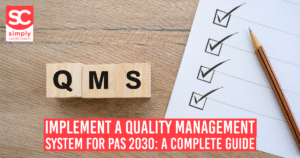
 Implement a Quality Management System for PAS 2030 compliance

Implement a Quality Management System for PAS 2030: A Complete Guide

Implementing a Quality Management System for PAS 2030 is an important step for organisations involved in installing energy efficiency measures in existing buildings.

Working in people’s homes carries huge responsibility. Every insulation panel, boiler upgrade, or ventilation system you install affects not just the building but the comfort, safety, and trust of the people living there. That’s why compliance and consistency aren’t optional extras — they’re essential.

If your organisation is involved in delivering energy efficiency measures, one of the most effective ways to demonstrate professionalism and build trust is to implement a Quality Management System (QMS) for PAS 2030. This guide explains how to do it step by step, showing you what’s required and why it makes such a difference.

What Does It Mean to Implement a Quality Management System for PAS 2030?

To put it simply, implementing a Quality Management System for PAS 2030 means creating clear processes that guarantee your installations are safe, compliant, and high quality. A QMS isn’t just paperwork — it’s a framework that covers training, documentation, quality control, customer satisfaction, and more.

Every organisation will tailor its QMS slightly differently, but the principles remain the same: clarity, consistency, and continual improvement.

Understanding PAS 2030 Requirements Before Implementing a Quality Management System for PAS 2030

Before implementing a quality management system for PAS 2030, it is essential to thoroughly understand the specification. The common downfall we see at Simply, are contractors attempting to bypass the fundamentals of reading and understanding the standard before starting the process of certification.

PAS 2030 outlines detailed requirements regarding installation processes, competence of personnel, documentation, and ongoing monitoring. The full specification is available through the British Standards Institution (BSI) and other industry bodies. Familiarising your team with these requirements helps ensure the QMS is designed correctly and aligns with industry expectations.

Leadership’s Role When You Implement a Quality Management System for PAS 2030

Leadership commitment plays a critical role in successfully implementing a quality management system for PAS 2030. Senior management must allocate adequate resources, define clear policies aligned with PAS 2030, and assign responsibilities to ensure ongoing compliance and continuous improvement. Effective leadership fosters a culture of quality and accountability, which is fundamental for maintaining standards over time.

Map Your Processes

Process mapping is a practical, hands-on tool to help you implement a Quality Management System for PAS 2030. By visualising each workflow, you’ll quickly spot gaps, overlaps, or inefficiencies. Better yet, process maps double up as useful audit evidence, proving your organisation understands and controls its operations.

Document Everything

Good documentation is the backbone of compliance. When you implement a QMS, you’ll need to keep records such as:

  • Installation procedures and method statements

  • Training records and qualifications

  • Inspection and testing reports

  • Customer handover paperwork

Keeping these up to date not only helps you run your business efficiently but also gives auditors the evidence they need during certification.

Monitor and Improve

A QMS is never a “set it and forget it” system. To keep it effective, you need ongoing monitoring. This includes:

  • Internal audits

  • Customer satisfaction checks

  • Corrective actions for nonconformities

This cycle of checking, fixing, and improving keeps your business sharp — and your customers happy.

Train and Develop Your Team

Your workforce is your most valuable asset, especially when working in customers’ homes. PAS 2030 puts a strong emphasis on competence. That means keeping detailed records of qualifications, training, and professional development. When you implement a Quality Management System, training becomes part of your culture, ensuring every installer is equipped to deliver safe, effective results.

Preparing for Certification

Once you have implemented a quality management system for PAS 2030 and ensured it is operating effectively, your organisation can seek certification from a UKAS-accredited certification body (CB).

Simply Certification are a UKAS accredited Certification Body(CB).

Why Implementing a Quality Management System for PAS 2030 Is Worth It!

Yes, implementing a QMS requires effort. But the benefits far outweigh the work:

  • Consistent quality in every installation

  • Reduced risks from poor practices

  • Customer trust by showing professionalism in their homes

  • Opportunities to access government-backed schemes like ECO

  • A stronger reputation in the energy efficiency and retrofit sectors

When you implement a Quality Management System for PAS 2030, you’re not just meeting a standard — you’re investing in your organisation’s future.

How to achieve PAS 2030 certification

The PAS 2030 guide to success: 7 Essential Steps

When you carry out energy efficiency work, you’re not just installing insulation, upgrading heating, or improving ventilation — you’re working inside someone’s home. That comes with a responsibility to protect their comfort, safety, and trust. Compliance and quality aren’t just paperwork requirements; they’re the foundation of professional, respectful service.

Whether you are a new installer seeking certification or an experienced organisation looking to renew, PAS 2030 certification provides a clear framework to achieve those standards. Assessments shouldn’t be viewed as a hindrance — they are an opportunity to prove professionalism, strengthen processes, and continually improve.

This guide explains the PAS 2030 certification process in detail, while highlighting the importance of impartiality through UKAS accreditation. By following these seven essential steps, your organisation can meet the necessary standards and show a strong commitment to quality, safety, and customer satisfaction.

What is PAS 2030 Certification?

PAS 2030 is a publicly available specification that sets out best practices and minimum requirements for the installation of energy efficiency measures in existing buildings. It covers a wide range of improvements — from insulation and heating to ventilation and more.

The purpose of PAS 2030 is simple: to ensure installations are carried out safely, effectively, and consistently to a high-quality standard.

Certification is often a mandatory requirement for participation in government-backed schemes such as the Energy Company Obligation (ECO), Social Housing Decarbonisation Funding (SHDF) and Warmer Homes Scheme. Achieving PAS 2030 not only opens the door to these opportunities but also reassures homeowners that their property is in safe hands.

Why is PAS 2030 Certification Important?

PAS 2030 certification ensures that your business complies with stringent requirements for quality management, staff competence, customer care, and health and safety. It helps to reduce risks associated with poor installations that could cause safety hazards or reduce energy savings. Furthermore, working with a UKAS-accredited certification body ensures impartial and robust assessment, giving your clients confidence in your services.

Step 1: Understand the Requirements

The first and most important step is to thoroughly understand the PAS 2030 standard and what it demands. The standard covers several critical areas:

  • Management of installation activities

  • Competency and training of personnel

  • Customer communication and satisfaction

  • Documentation and record-keeping

  • Health, safety, and environmental compliance

Staying up to date with any amendments to PAS 2030 is essential, as standards evolve to reflect new regulations, technologies, and best practices.

Step 2: Prepare Your Organisation

Before applying for certification, conduct a thorough gap analysis comparing your current operations against PAS 2030 requirements. Identify areas needing improvement or new processes that must be implemented. This stage also involves assigning clear responsibilities to team members and ensuring leadership is fully committed to meeting PAS 2030 standards. A strong foundation at this stage significantly improves your chances of success.

Step 3: Develop and Implement Procedures

Develop comprehensive and clear procedures that address every aspect of your installation projects — from initial enquiry and assessment through to installation, quality control, and post-installation support. These documented procedures must be consistently followed by all team members and form a key part of your audit trail during certification.

Step 4: Train Your Team

Competence of your workforce is a cornerstone of PAS 2030. You must ensure all staff involved in installations receive adequate training on technical skills and the requirements of the PAS 2030 standard. Maintaining detailed training records is vital evidence for your certification audit. Training should be regularly updated to keep pace with changes in regulations and technology.

Step 5: Conduct Internal Audits

Regular internal audits are necessary to verify that your procedures are effective and that compliance is maintained. These audits identify non-conformities early, allowing you to take corrective actions before external audits. A systematic audit schedule and clear documentation of findings and improvements demonstrate your commitment to continuous improvement.

Step 6: Choose an Accredited Certification Body

When you are confident your organisation meets the PAS 2030 requirements, the next step is to select a UKAS-accredited certification body to carry out your external audit. UKAS accreditation is crucial as it ensures the certification process is impartial, rigorous, and internationally recognised. Choosing an accredited body helps avoid potential conflicts of interest and reassures customers of your credibility.

Step 7: Pass the External Audit

The final hurdle is the external audit conducted by your chosen certification body. The audit includes reviewing your documentation, interviewing staff, and inspecting installation sites. Demonstrating consistent compliance with PAS 2030 requirements during the audit leads to successful certification. After certification, regular surveillance audits will ensure ongoing adherence.

Additional Resources and Support

For further detailed information and official guidance, consider these reputable sources:

Conclusion

Achieving PAS 2030 certification is a structured but achievable process that strengthens your organisation’s reputation for quality and safety in energy efficiency installations. By understanding the standard’s requirements, preparing your organisation, training your staff, and working with a UKAS-accredited certification body, you set your business on the path to successful certification and long-term compliance.

If you would like to explore how Simply Certification can support your certification journey, please visit our services page or contact our team directly.

Part of TrustMark - PAS 2030 retrofit installer working on home insulation

Part of TrustMark – PAS 2030: Why It Matters for Retrofit Installers

In the rapidly evolving world of home and building energy efficiency, retrofit installers face growing demands to deliver quality, safety, and compliance. One way to stand out and build trust with customers is through certification with Part of TrustMark – PAS 2030. But what exactly does this certification entail, and why is it so important for retrofit installers today?

In this blog, we’ll explore the critical role that Part of TrustMark – PAS 2030 that plays in the retrofit industry, how it benefits installers, and why achieving this certification is essential for businesses looking to succeed in a competitive and regulated market. Whether you’re new to retrofit or looking to strengthen your credentials, understanding PAS 2030 is key to future-proofing your installation services.

But, first things first…

What is PAS 2030?

PAS 2030 is the UK’s recognised specification for the installation of energy efficiency measures in existing buildings. Developed to set a high standard for retrofit installers, PAS 2030 outlines detailed requirements that ensure consistent quality, safety, and customer service in energy efficiency retrofit projects within an existing building.

This specification plays a vital role in helping retrofit installers meet legal and regulatory requirements while enhancing the overall quality of energy efficiency upgrades in homes and commercial properties (alongside PAS 2038). As governments across the UK focus on reducing carbon emissions and improving energy efficiency, PAS 2030 certification has become essential for installers who want to work within official schemes, such as the Energy Company Obligation (ECO), which incentivises energy-saving measures in homes.

What Does PAS 2030 Cover?

PAS 2030 covers a wide range of retrofit measures, including:

  • Insulation (loft, cavity wall, solid wall, floor insulation)

  • Heating system upgrades (boilers, heat pumps)

  • Ventilation improvements

  • Renewable energy installations

The specification requires installers to follow a robust quality management system that includes project planning, risk assessments, quality checks, and post-installation monitoring. This system ensures that every retrofit installation complies with current UK building regulations, safety standards, and industry best practices.

The Role of TrustMark in Retrofit Standards

TrustMark is the UK government-endorsed quality scheme designed to give homeowners and consumers confidence when hiring tradespeople. It acts as a mark of trust and professionalism.

Retrofit installers who are certified under Part of TrustMark – PAS 2030 demonstrate their commitment to delivering high-quality work that meets government standards. TrustMark membership is not just a badge alongside PAS 2030; it provides consumers with reassurance that the installers are reliable, competent, and accountable.

Being part of TrustMark also provides an additional layer of consumer protection. For example, if something goes wrong during or after the retrofit project, TrustMark offers a clear pathway for complaints and dispute resolution, which is invaluable for customer peace of mind.

Moreover, many government-funded schemes or local authority programs require participating installers to be both PAS 2030 certified and TrustMark registered. This makes the combined status a critical badge of credibility and eligibility in the retrofit industry.

For more on TrustMark standards, visit the official TrustMark website.

Why PAS 2030 Matters for Retrofit Installers

For retrofit installers, achieving Part of TrustMark – PAS 2030 certification is much more than just ticking a regulatory box. It brings tangible business advantages that can drive growth and success.

Compliance Assurance

PAS 2030 certification ensures that all retrofit installations comply fully with the latest building regulations and energy efficiency standards. This reduces the risk of non-compliance penalties, legal issues, or customer disputes, protecting the installer’s reputation and business longevity.

Building Customer Confidence

With growing consumer awareness around home energy efficiency and safety, homeowners and commercial clients want to be certain that retrofit works are completed by qualified professionals. Being PAS 2030 certified instantly signals that an installer is trustworthy, competent, and follows industry-leading practices.

Access to Government Funding and Schemes

Many government-backed retrofit programs, including the Energy Company Obligation (ECO), require installers to be PAS 2030 certified. Without this certification, installers miss out on lucrative contract opportunities funded through these schemes.

Competitive Edge in a Growing Market

The retrofit market is expanding rapidly as the UK government aims to meet carbon reduction targets. PAS 2030 certification helps installers stand out from competitors who have not invested in this qualification. It can be the deciding factor when bidding for contracts or winning customers.

Benefits of Being Part of TrustMark – PAS 2030

Being part of TrustMark and holding PAS 2030 certification offers retrofit installers a range of benefits:

  • Enhanced Credibility: Membership signals a professional commitment to quality and best practices, appealing to both consumers and commercial clients.

  • Improved Quality Control: PAS 2030 mandates systematic quality assurance processes, meaning every project is thoroughly checked and monitored for compliance and workmanship.

  • Increased Business Opportunities: Many local authorities, housing associations, and government programs mandate PAS 2030 certification, unlocking access to a wider range of retrofit contracts.

  • Consumer Protection and Support: TrustMark membership offers customers protection mechanisms and complaint handling services, providing added confidence in choosing certified installers.

How to Achieve PAS 2030 Certification

Becoming PAS 2030 certified involves a clear, step-by-step process:

  1. Understand PAS 2030 Requirements: Retrofit installers must thoroughly review the specification’s standards relating to quality management, installation practices, and customer service.

  2. Implement a Quality Management System (QMS): This system governs all stages of retrofit delivery, including project planning, installation, customer communication, and complaints handling.

  3. Train Your Workforce: All staff involved in retrofit installations must be appropriately trained and competent in the relevant measures covered by PAS 2030.

  4. Undergo Independent Assessment: An accredited certification body—such as Simply Certification Limited—conducts audits and assessments to verify compliance with PAS 2030.

  5. Receive Certification: Once all requirements are met and verified, the installer is awarded PAS 2030 certification, enabling them to register with TrustMark and participate in government retrofit schemes.

Key Takeaways

For retrofit installers serious about growing their business and maintaining high standards, being Part of TrustMark – PAS 2030 is essential. It is not only a mark of quality and professionalism recognised by consumers but also a gateway to government funding and business opportunities.

Installers who invest in PAS 2030 certification gain compliance assurance, improved customer trust, and a competitive edge in the booming retrofit market.

If you want to explore PAS 2030 certification or learn how Simply Certification Limited can help your retrofit business achieve this vital standard, contact us today.

Management System Auditing

Management System Auditing in PAS 2030 and MCS Assessments

Management System Auditing is a vital element in PAS 2030 and MCS assessments, yet it is sometimes overlooked. In the low-carbon and renewable energy sector, standards such as PAS 2030 and the Microgeneration Certification Scheme (MCS) assure compliance, quality, and consumer protection.

While much attention is placed on the technical quality of installations, the effectiveness of the management system that supports the business is equally important. Strong governance, clear processes, and robust systems help ensure that technical work is delivered consistently, compliantly, and sustainably.

1. What is Management System Auditing?

A management system audit is a structured review of how an organisation is managed. Instead of focusing solely on technical outputs, it looks at the business processes that underpin them.

Auditors assess whether the organisation has effective systems in place to consistently meet requirements. Typical areas covered include:

  • Governance and accountability – clarity of responsibility across the business.

  • Record-keeping and documentation – the ability to evidence compliance.

  • Financial stability and reporting – controls that demonstrate resilience.

  • Staff training and competency management – ensuring employees remain competent.

  • Customer communication and complaints handling – responsiveness and transparency in customer care.

  • Continuous improvement – processes for reviewing performance and learning from issues.

For organisations seeking PAS 2030 or MCS certification, the audit confirms that they are not only technically proficient but also supported by a framework that ensures consistency, compliance, and sustainability.

2. A Brief Overview of PAS 2030 and MCS

To understand the importance of auditing in this context, it helps to look at the standards themselves.

  • PAS 2030 is the standard for the installation of energy efficiency measures in existing buildings. It works alongside PAS 2035, which sets out the overarching retrofit process. Together, they ensure installations are high-quality, safe, and effective.

  • MCS is a certification scheme for low-carbon and renewable energy technologies such as solar PV, heat pumps, and battery storage. It assures consumers that installations meet robust technical and consumer protection standards.

Both frameworks place strong emphasis on technical competence, but they also recognise that consumer protection relies on the strength of the business systems behind the delivery.

3. Why Management System Auditing Matters

The purpose of PAS 2030 and MCS is not only to regulate technical standards but also to build trust in the sector. A technically skilled installer working without effective business systems may still face:

  • Compliance breaches that put installs at risk.

  • Inconsistent customer service leading to complaints and reputational harm.

  • Operational inefficiencies such as duplicated work or poor scheduling.

  • Financial instability, potentially leaving projects unfinished.

  • Process gaps, leading to confusion and errors across the business

Management system auditing addresses these risks by ensuring organisations are managed in a way that supports reliability, compliance, and resilience.

4. Spotting Gaps in Business Foundations

A key strength of management system auditing is its ability to highlight issues before they cause problems. For example:

  • Training gaps could mean staff are not fully qualified for the tasks they undertake.

  • Weak record-keeping might make it difficult to demonstrate compliance during assessments.

  • Inconsistent customer communication could result in dissatisfaction and poor reviews.

By identifying such gaps early, organisations have the opportunity to correct them, reducing the likelihood of non-conformities and safeguarding their reputation.

Practical view: Management system auditing works like preventative maintenance—it identifies small cracks before they turn into structural failures.

5. Beyond Risk: Driving Performance

Management system audits do more than reduce risk; they also provide a platform for improved performance. Structured systems lead to:

  • Greater efficiency – avoiding duplication of work.

  • Clear accountability – ensuring responsibilities are well defined.

  • Improved project delivery – consistent and repeatable processes.

  • Fewer errors – reducing the likelihood of rework or delays.

  • Better customer experience – reliable communication and aftercare.

For organisations engaged in PAS 2030 or MCS certification, this means demonstrating not just technical competence, but also operational maturity.

6. Building Resilience for the Long Term

Even where installations are technically excellent, weaknesses in business systems can undermine sustainability. Risks include:

  • Insolvency due to inadequate financial management.

  • Certification withdrawal following compliance failures.

  • Administrative breakdowns leading to delays and consumer frustration.

Management system auditing assures that businesses are capable of withstanding such pressures. This resilience is essential not only for the success of individual organisations but also for maintaining confidence across the renewable energy sector.

7. Integration with Other Standards

Many organisations choose to align PAS 2030 and MCS requirements with other management system frameworks, such as ISO 9001 – Quality Management Systems.

This integrated approach can:

  • Simplify compliance by reducing duplication of processes.

  • Provide internationally recognised evidence of quality management.

  • Strengthen consumer and stakeholder confidence in the business.

By combining sector-specific standards with broader management system requirements, organisations can streamline operations while demonstrating commitment to quality at every level.

8. Protecting Consumers and the Sector

At their core, PAS 2030 and MCS standards exist to protect consumers and ensure long-term trust in the renewable energy sector.

Without effective management systems, risks to consumers may include:

  • Projects left incomplete.

  • Poor aftercare once installations are complete.

  • Invalid warranties if a business is unable to honour commitments.

Management system auditing provides assurance that businesses are structured, accountable, and capable of delivering reliable outcomes, which ultimately benefits both consumers and the sector as a whole.

9. Frequently Asked Questions

Q: Is management system auditing just paperwork?
No. While documentation is important, auditing is about assessing how effectively systems are applied in practice. Evidence must demonstrate that processes are followed consistently.

Q: Do PAS 2030 and MCS require a management system audit?
Yes. Both frameworks require organisations to demonstrate effective management systems as part of the certification process. Auditing is how this assurance is provided.

Q: How is management system auditing different from consultancy?
Auditing is an impartial assessment against defined standards. It does not provide solutions or advice but instead identifies whether requirements are being met. Consultancy, by contrast, would involve advising on how to implement solutions—something separate from the certification process.

Q: Can audits help with continuous improvement?
Yes. While audits are impartial assessments, the findings can highlight opportunities for organisations to make improvements within their own systems.

10. Key Takeaways

  • Management system auditing is a central element of PAS 203o and MCS assessments.
  • It reduces risk, drives efficiency, and demonstrates organisational resilience.
  • Integrated approaches, such as aligning with ISO 9001, provide additional assurance.
  • Ultimately, strong management systems protect consumers, strengthen businesses, and support confidence across the renewable energy industry.

Key Purpose of PAS 2030 and PAS 2035

Key Purpose of PAS 2030 and PAS 2035: Essential Guide to Successful Retrofit Standards

The key purpose of PAS 2030 and PAS 2035 is to raise quality, consistency, and trust in UK retrofit projects. As the UK aims to improve energy efficiency in existing buildings, these two Publicly Available Specifications (PAS), developed with the British Standards Institution (BSI) and government stakeholders, have become the foundation for delivering safe, effective, and long-lasting improvements.

This guide explains the key purpose of PAS 2030 and PAS 2035, how they work together, and why they matter to installers, assessors, and homeowners.

Understanding the Key Purpose of PAS 2030 and PAS 2035

Both PAS 2030 and PAS 2035 were introduced to address challenges in retrofit quality, performance, and consumer protection. They provide structured requirements that ensure energy efficiency measures are properly assessed, designed, installed, and managed.

By adopting these standards, the industry aims to avoid poor workmanship, inconsistent results, and wasted investment in upgrades that do not deliver their promised benefits.

What is PAS 2030?

PAS 2030 sets the standard for installers of energy efficiency measures in existing buildings. It defines how installations should be carried out and sets minimum competence requirements for installers.

Key purposes of PAS 2030 include:

  • Ensuring correct installation of insulation, heating systems, glazing, and other improvements.

  • Providing a benchmark for installer training and skills.

  • Supporting compliance with funded schemes such as ECO (Energy Company Obligation) and TrustMark registration.

Certification to PAS 2030 is often achieved through a UKAS-accredited certification body, giving independent proof that an installer’s processes meet the standard.

What is PAS 2035?

PAS 2035 governs the assessment, design, and management of retrofit projects, taking a whole-house approach rather than focusing on single measures in isolation.

Key purposes of PAS 2035 include:

  • Coordinating retrofit activities through a designated Retrofit Coordinator.

  • Assessing the property as a whole to prevent issues such as damp, mould, or overheating.

  • Balancing energy performance goals with occupant health and comfort.

While PAS 2030 focuses on the “how” of installation, PAS 2035 focuses on the “why” and “what” — ensuring that measures are chosen and planned with the bigger picture in mind.

How the Key Purpose of PAS 2030 and PAS 2035 Align

The key purpose of PAS 2030 and PAS 2035 is best achieved when they work in partnership:

  • PAS 2035 sets the assessment and design framework.

  • PAS 2030 ensures the installation work meets those plans and technical requirements.

This combination helps avoid costly mistakes and ensures that energy-saving measures perform as intended. For example, insulating a wall without considering ventilation could lead to condensation — PAS 2035 ensures such risks are identified and mitigated before work starts.

Why These Standards Were Introduced

Before these PAS were introduced, retrofit projects sometimes fell short due to inconsistent approaches, lack of accountability, and minimal oversight.

The key purpose of PAS 2030 and PAS 2035 is to:

  • Improve installation quality.

  • Reduce the likelihood of post-installation problems.

  • Increase consumer confidence in retrofit work.

  • Support the UK’s carbon reduction and net-zero goals.

By setting out clear, auditable requirements, these PAS help the industry deliver measurable, long-term improvements in building performance.

The Role of UKAS Accreditation

PAS standards define the rules, but accreditation ensures the rules are applied fairly and consistently.

The United Kingdom Accreditation Service (UKAS) assesses and approves certification bodies that verify compliance with PAS 2030 and PAS 2035. Choosing a UKAS-accredited certification body ensures that assessments are impartial, technically competent, and recognised by government schemes.

Benefits for Installers

Following the key purpose of PAS 2030 and PAS 2035 provides several benefits:

  • Access to government-funded retrofit schemes.

  • Reduced risk of remedial work and disputes.

  • Increased credibility and competitive advantage.

Benefits for Homeowners

Homeowners also benefit when installers follow these PAS standards:

  • Greater confidence in workmanship quality.

  • Assurance that improvements are tailored to their property’s needs.

  • Reduced risk of long-term building damage.

Training and Continuous Improvement

Both PAS 2030 and PAS 2035 encourage ongoing professional development. Installers, assessors, and coordinators must maintain their skills through training, keeping up with new techniques, products, and regulatory updates.

This commitment to improvement ensures the PAS framework remains relevant and effective as technology advances.

Future of PAS 2030 and PAS 2035

As the UK moves towards net zero, these PAS will continue evolving to incorporate new materials, digital tools, and more ambitious performance targets. The key purpose of PAS 2030 and PAS 2035 will remain consistent: to protect quality, enhance performance, and safeguard homeowners’ investments.

Conclusion

The key purpose of PAS 2030 and PAS 2035 is to ensure retrofit projects are designed, managed, and installed to the highest standards, delivering real energy efficiency gains while protecting the wellbeing of occupants.

By aligning both standards, supported by UKAS-accredited certification, the retrofit industry can deliver long-lasting results that support both homeowners and national energy goals.

 PAS 2030 certified installer fitting insulation in a UK home

What is PAS 2030?

PAS 2030 is a UK Publicly Available Specification that outlines the requirements for installing energy efficiency measures (EEMs) in domestic properties. The standard was introduced to ensure energy upgrades—such as insulation, ventilation, and heating—are delivered to a consistently high quality.

The most recent version, PAS 2030:2023, is designed to support the UK’s carbon reduction strategy and aligns with the whole-house approach defined in PAS 2035. Installers must be certified to carry out work under schemes such as the Energy Company Obligation (ECO).

Why PAS 2030 Certification Matters

PAS 2030 certification plays a central role in ensuring that energy efficiency installations meet recognised standards for quality and safety. It gives consumers confidence and is required for participation in government-funded schemes.

Certification is carried out by UKAS-accredited certification bodies and requires that installers:

  • Have appropriate qualifications and training

  • Hold valid insurance policies

  • Follow a documented quality management system

  • Submit to regular audits and surveillance

For installers, PAS 2030 is more than a compliance requirement—it demonstrates professionalism, quality assurance, and a commitment to energy efficiency.

External resource:
BSI – PAS 2030 Overview

Top 7 Benefits of PAS 2030 Compliance

1. Quality Assurance

PAS 2030 ensures that all installations follow defined technical specifications and are carried out by competent professionals.

2. Access to Government Funding

Installers must be certified to deliver work under schemes like ECO and Local Authority Delivery programmes.

3. Consumer Protection

Certified installers are required to provide warranties and have liability insurance in place, reducing risk for the customer, making them a more attractive choice.

4. Lower Environmental Impact

Energy-efficient improvements such as insulation reduce a home’s carbon footprint, contributing to national and global sustainability goals.

5. Join a growing market to enhance property values

That’s right its a growing market place driven by homeowners who want their homes to be of higher valued! Homes that are retrofitted to a high standard tend to be more energy efficient, potentially increasing their market value, therefore homeowners.

6. Competitive Advantage for Installers

Certification helps businesses stand out by showcasing commitment to quality and compliance – almost like a badge of honour!

7. Optmise business performance!

A structured approach to installation, training, and auditing reduces errors and therefore need to remediate – which increases profit margins and leads to more satisfied customers (and more referrals!)

How to Become Certified

Installers must complete several key steps to become certified:

  1. Complete recognised training relevant to the measures they intend to install.

  2. Hold adequate insurance, such as public liability and employers’ liability.

  3. Implement a quality management system (QMS) that includes policies for complaints, internal audits, and documentation.

  4. Engage a UKAS-accredited certification body to conduct a formal assessment.

  5. Maintain compliance through ongoing surveillance and audits.

For a breakdown of the certification services, visit:
Our Certification Services

PAS 2030 vs PAS 2035

While PAS 2030 specifies how retrofit measures should be installed, PAS 2035 defines the process for managing whole-house retrofit projects. PAS 2035 introduces a Retrofit Coordinator role, who is responsible for assessing a property’s condition, creating a retrofit plan, and ensuring the measures installed align with long-term energy efficiency goals.

Together, they ensure that installations are not only compliant but also suitable for the specific property and occupant needs.

Conclusion

PAS 2030 plays a crucial role in the UK’s mission to improve domestic energy efficiency. For homeowners, it offers protection, funding eligibility, and peace of mind. For installers, it provides a clear framework for high-quality installations and access to funded work.

Complying with PAS 2030:2023 ensures that energy efficiency improvements are delivered safely, efficiently, and in line with industry best practices. Whether you’re looking to become certified or hire a certified installer, this certification is a mark of trust and quality in retrofit work.

PAS 2030 certification explained for UK installers

PAS 2030 Certification Explained: Valuable Guide for Installers

Needing to have PAS 2030 Certification Explained is often required by installers, retrofit coordinators, and businesses involved in energy efficiency measures. It’s a publicly available specification developed to ensure installation work meets consistent, high-quality standards across the UK. This certification is widely recognised in government-backed schemes, helping ensure compliance, consumer protection, and trust.

This impartial guide sets out what PAS 2030 covers, why it matters, and what organisations should expect from the process — without endorsing any specific provider.

What is PAS 2030 Certification?

Wanting PAS 2030 Certification Explained is easy for us as we are experts!

The standard itself is around the quality standard for the installation of energy efficiency measures such as insulation, windows, and heating systems. Developed by the British Standards Institution (BSI), it defines the process, materials, and workmanship requirements installers must meet.

It’s designed to align with related standards like PAS 2035, which covers the assessment and design of retrofit projects, ensuring an end-to-end approach to improving energy performance in buildings.

Why PAS 2030 Certification Matters

Having PAS 2030 Certification shows that an installer has been assessed by a certification body and meets the required standard. This is particularly important for companies working under schemes such as ECO (Energy Company Obligation) or other government-backed initiatives.

It also reassures customers that the work carried out will meet defined quality benchmarks, reducing the risk of installation defects or performance issues.

The Role of UKAS Accreditation

When wanting PAS 2030 Certification explained, it’s essential to understand the role of the United Kingdom Accreditation Service (UKAS). UKAS accredits certification bodies to ensure they operate impartially, competently, and consistently.

Choosing a UKAS-accredited certification body means your PAS 2030 certificate will be recognised by relevant schemes and trusted by stakeholders. You can verify accreditation status through the UKAS website.

The PAS 2030 Certification Process

While processes vary between certification bodies, the general steps for PAS 2030 Certification include:

  1. Application – Submitting organisational and operational details to the certification body.

  2. Document Review – Checking quality management systems, processes, and compliance with PAS 2030 requirements.

  3. On-Site Assessment – Visiting live or completed installations to verify workmanship.

  4. Decision – Granting certification if requirements are met.

  5. Ongoing Surveillance – Annual assessments to ensure continued compliance.

Link Between PAS 2030 and PAS 2035

When wanting PAS 2030 Certification explained, it is easier when you also look at PAS 2035. PAS 2035 sets out the requirements for retrofit assessments, design, and coordination, while PAS 2030 focuses on the installation stage.

For many projects, both standards are used together to create a complete, quality-assured retrofit process.

Key Considerations Before Applying

Before starting the process for PAS 2030 Certification, consider the following:

  • Quality Management System (QMS) – Ensure you have a robust QMS in place that aligns with PAS 2030 requirements.

  • Training and Competence – Staff should have the necessary qualifications and skills for the measures they install.

  • Documented Processes – Keep clear records of installations, materials, and checks.

  • Impartiality – Certification bodies will require evidence that you meet the standard without conflicts of interest.

Benefits of PAS 2030 Certification

When exploring PAS 2030 Certification Explained, it’s worth noting the benefits:

  • Eligibility for Government Schemes – Many funding programmes require PAS 2030 compliance.

  • Customer Confidence – Demonstrates commitment to quality and compliance.

  • Reduced Risk – Clear processes help prevent costly mistakes or rework.

  • Market Advantage – Certification can make your business more competitive in the retrofit sector.

Where to Learn More

For more about “PAS 2030 Certification Explained”, visit:

Final Thoughts

PAS 2030 Certification is more than just a technical requirement — it’s a structured approach to ensuring high-quality, compliant installations that meet the UK’s energy efficiency goals. By understanding the standard, choosing a UKAS-accredited certification body, and preparing your organisation properly, you can approach the certification process with confidence and impartiality.

Whether you’re new to PAS 2030 or looking to maintain your current certification, keeping up to date with the requirements is key to continued success.