Tag Archive for: Renewables


10 Important Steps to Certification: MCS

What are the 10 important steps to certification? If you’re a contractor or business that installs renewable energy technology and is looking to work on government-backed energy efficiency schemes in the UK, obtaining MCS certification is essential! MCS certification sets the standard for installing renewable energy technologies, ensuring quality, compliance, and customer confidence. However, the process can seem tricky without the right guidance.

In this blog, we’ll explain the 10 important steps to certification for MCS, from understanding the requirements to passing assessments and maintaining compliance. Whether you’re new to the process or seeking to refine your approach, this guide will help you navigate the certification journey with confidence.

First Things First…What is MCS Certification?

The Microgeneration Certification Scheme (MCS) is the UK’s nationally recognised quality standard for small-scale, renewable energy technologies. It ensures that both the products used and the installers who fit them meet rigorous performance, safety, and quality standards.

MCS certification applies to renewable technologies such as:

  • Solar Photovoltaics (PV)

  • Air and Ground Source Heat Pumps

  • Solar Thermal

  • Battery Storage

For installers, MCS certification isn’t just about credibility – it’s financial gateway. Homeowners and businesses can only access government-backed incentives (like the Smart Export Guarantee) if their system is installed by an MCS-certified installer using MCS-certified products.

Who provides MCS certification?

MCS certification is provided by UKAS-accredited certification bodies that assess businesses for compliance with the MCS standard. These organisations audit installers, ensuring they meet the required standards for quality, competence, and compliance. An example of a UKAS-accredited certification body is us – Simply Certification!

One difficult thing to decide is which certification body you should choose. Many different factors can influence your decision including:

  • Assessor availability
  • Customer service
  • The costs and fees involved
  • Reputation and track record
  • Expertise and experience

Choosing Simply Certification as your certification body for MCS has a whole host of benefits. Our team is made up of leading experts in MCS and we can answer your questions quickly. The service we provide is supportive and responsive – gaining certification can be a little daunting and we remove the fear factor. Take a look to see what one of our customers had to say:

“A very comprehensive and diligent process from start to finish. I would highly recommend Simply Certification and will feel assured when working with any companies who carry accreditation provided by them”.

Nebula Renewables Ltd

If you still cannot decide, don’t worry, we’ve got you covered! Just check out one of our previous blogs, 8 Things to look for when choosing a certification body.

What are the 10 Important Steps to Certification?

To achieve MCS certification, businesses must follow a structured process to ensure compliance with the standard. Below are our 10 important steps to certification:

#1 – Access Simply Hub 

We have a self service onboarding system, called Simply Hub. To start the process of certification with us, you will need access to this as the first step.

To access you need to register your interest and a link to access Simply Hub will be sent to you to start the application process.

#2 – A quotation will be issued within Simply Hub

Almost like a shopping basket, a quote in Simply Hub will be presented to you. You can amend the measures you wish to go for as many times as you wish. Once you are happy to proceed, just accept the quotation.

#3 – Pay the invoice and complete the contract documentation from PandaDocs

An invoice will be sent to you once your quotation has been accepted. Once you have paid the invoice you will be emailed the contract documentation via PandaDocs. Once this is completed you will receive an assessment Checklist.

#4 – Assessment Preparation and Checklist Update

You must prepare for your assessments, ensuring you have the required evidence available to present to us, showing compliance to the standards you have applied for. As we are a certification body, we are not allowed to support you in the preparation or advise you. To protect you from a high number of non conformances we ask that you complete the online checklist so you can be confident you are ready.

#5 – Assessment Plan and Bookings

Once we have received your completed checklist – our bookings team will be in touch with you we will then schedule your assessment with our assessors.

#6 – Head Office Assessment

This is currently conducted onsite, our assessor will spend a day with you to run through your documentation, processes and procedures to ensure they are all in line with the standard.

#7 – Technical Inspections

Our technical team will carry out an assessment on the measures you are applying for. These must be post for all measures.

#8 Verification and decision making

Once any non-conformances have been closed by the assessor, we will send your reports to an independent verifier who will ensure the standards have been met. Once the verifier is satisfied with the reports, an internal decision-maker will make final decision to grant certification.

#9 Certification granted

Once certification has been granted, we will send your certification pack via email. We will also send you marketing material to shout about your success.

#10 Maintaining certification

To maintain certification, you will be subject to ongoing surveillance to ensure ongoing compliance with the scheme requirements. You will be required to notify us of your installs so that we can carry out inspections throughout the duration of your certification.

Finally…

Achieving MCS certification is a crucial step for businesses looking to work on government-backed energy efficiency projects and major contracts. By following these 10 important steps to certification, you’ll not only ensure compliance with industry standards but also position your business for long-term success in the retrofit sector.

While the process may seem complex, the right preparation—such as developing a good Quality Management System (QMS) and choosing a reputable certification body—will make the journey smoother.

Now that you understand what it takes to become MCS certified and you know the 10 important steps to certification, it’s time to take the next step. Start by reviewing your processes, gathering the necessary documentation, and reaching out to a certification body to begin your application.

If you need further guidance, feel free to get in touch – we’re here to help!
We’re Officially UKAS Accredited for D2 Lighting Systems and Controls!

Simply Certification Secures UKAS Accreditation for D2 – Lighting Systems and Controls

We’re proud to announce that Simply Certification has officially achieved UKAS accreditation for D2, covering lighting fittings, lighting systems, and lighting system controls. This marks an exciting expansion of our certification services and reinforces our commitment to supporting the UK’s drive toward energy efficiency and net-zero targets by 2050.

As a certification body dedicated to simplifying the route to PAS 2030 compliance, this new accreditation means we can now offer fully UKAS-accredited certification to installers delivering energy-efficient lighting solutions, one of the most accessible and impactful measures in building retrofit projects.

What Does D2 – Lighting Cover?

The D2 measure under PAS 2030:2023 encompasses the design, installation, and commissioning of low-energy lighting systems and controls. This includes:

  • Upgrading outdated lighting fittings with high-efficiency LED technologies

  • Installing full lighting systems in domestic buildings

  • Integrating lighting controls, such as dimmers, motion sensors, timers, and smart systems, to optimise energy usage

These installations contribute significantly to reducing a building’s overall energy consumption and carbon emissions, while also enhancing usability, comfort, and long-term cost savings for occupants.

Why This Accreditation Matters…

Being UKAS-accredited means our certification services are independently verified to meet the highest standards of impartiality, competence, and consistency. It gives installers confidence that their PAS 2030 certification is:

  • Robust, credible, and widely recognised

  • Eligible for access to government-backed funding schemes like ECO4

  • Aligned with TrustMark requirements

Installers certified under a UKAS-accredited body like Simply Certification are in a stronger position to win contracts, meet funding criteria, and demonstrate high-quality standards to customers and partners.

Supporting Installers Through Every Step

Achieving PAS 2030 certification can seem like a complex process, especially with technical measures such as D2, which involves both electrical installations and smart control systems. That’s why our approach is built around making certification clear, supportive, and efficient.

Whether you’re a micro business, a growing SME, or an established contractor diversifying your offering, our process supports your business needs.

Why Now Is the Right Time for D2 Certification

With the UK Government’s focus on reducing building emissions and improving energy efficiency through initiatives such as ECO4 and SHDF the demand for competent and certified lighting system installers is growing rapidly.

D2 is a particularly attractive measure because:

  • Lighting upgrades are highly cost-effective and easy to implement

  • It’s a low-disruption option for homeowners and tenants

  • Smart lighting controls can deliver long-term energy savings

Becoming certified now ensures you’re well-positioned to access funded work, meet compliance requirements, and gain a competitive edge in the market.

Join the Growing Network of Certified Professionals

Our newly awarded UKAS accreditation for PAS 2030 under D2 expands the opportunities for installers and reflects our ongoing investment in helping tradespeople and businesses thrive in the retrofit space.

If you’re ready to take advantage of this growing market and want a certification body that’s responsive, clear, and genuinely supportive, Simply Certification is here to help.

Get Started Today!

📞Call: 0191 323 3960

📧Email: hello@simplycertification.co.uk

🌐Visit: www.simplycertification.co.uk

Let’s light up the future together!

10 Important Steps to Certification

What are the 10 important steps to certification? If you’re a contractor or business looking to work on government-backed energy efficiency schemes in the UK, obtaining PAS 2030 certification is essential! PAS 2030 certification sets the standard for installing energy-efficient measures, ensuring quality, compliance, and customer confidence. However, the process can seem tricky without the right guidance.

In this blog, we’ll explain the 10 important steps to certification for PAS 2030, from understanding the requirements to passing assessments and maintaining compliance. Whether you’re new to the process or looking to refine your approach, this guide will help you confidently navigate the certification journey.

First Things First…What is PAS 2030 Certification?

PAS 2030 Certification is a UK standard that sets out the requirements for businesses installing energy efficiency measures. The standard ensures that installations meet high-quality standards and are compliant with government-backed schemes like the Energy Company Obligation (ECO).

A few of the energy efficiency measures that PAS 2030 covers are:

  • B1 – Cavity Wall Insulation
  • B2 – Draught Proofing
  • B3 – Energy Efficient Glazing & Doors
  • B4 – External Wall Insulation
  • B5 – Flat Roof Insulation
  • B6 – Floor Insulation
  • B8 – Internal Wall Insulation
  • B9 – Loft Insulation
  • B10 – Pitched Roof Insulation
  • B12 – Room-in-Roof Insulation
  • C1 – Gas-fired Condensing Boilers
  • C5 – Heating Controls
  • D1 – Electric Storage Heaters

Since 2021, PAS 2030 must be used alongside PAS 2035, which sets the framework for whole house retrofit projects. This means that energy efficiency upgrades should be planned in a way that considers the entire building’s performance rather than just installing single measures in isolation.

Who provides PAS 2030 certification?

PAS 2030 certification is provided by UKAS-accredited certification bodies that assess businesses for compliance with the  PAS 2030 standard. These organisations audit installers, ensuring they meet the required standards for quality, competence, and compliance. An example of a UKAS-accredited certification body is us – Simply Certification!

One difficult thing to decide is which certification body you should choose. Many different factors can influence your decision including:

  • Assessor availability
  • Customer service
  • The costs and fees involved
  • Reputation and track record
  • Expertise and experience

Choosing Simply Certification as your certification body for PAS 2030 has a whole host of benefits. Our team is made up of leading experts in PAS 2030 and we can answer your questions quickly. The service we provide is supportive and responsive – gaining certification can be a little daunting and we remove the fear factor. Take a look to see what one of our customers had to say:

“We approached Simply Certification as we were disappointed with the service of the certification body that we had used for several years for our PAS 2030. What a stark contrast! From start to finish, I have found the team at Simply responsive, understanding and extremely helpful”.

BCS Render Systems Ltd

If you still cannot decide, don’t worry, we’ve got you covered! Just check out one of our previous blogs, 8 Things to look for when choosing a certification body.

What are the 10 Important Steps to Certification?

To achieve PAS 2030 certification, businesses must follow a structured process to ensure compliance with the standard. Below are our 10 important steps to certification:

#1 – Access Simply Hub 

We have a self service onboarding system, called Simply Hub. To start the process of certification with us, you will need access to this as the first step.

To access you need to register your interest and a link to access Simply Hub will be sent to you to start the application process.

#2 – A quotation will be issued within Simply Hub

Almost like a shopping basket, a quote in Simply Hub will be presented to you. You can amend the measures you wish to go for as many times as you wish. Once you are happy to proceed, just accept the quotation.

#3 – Pay the invoice and complete the contract documentation from PandaDocs

An invoice will be sent to you once your quotation has been accepted. Once you have paid the invoice you will be emailed the contract documentation via PandaDocs. Once this is completed you will receive an assessment Checklist.

#4 – Assessment Preparation and Checklist Update

You must prepare for your assessments, ensuring you have the required evidence available to present to us, showing compliance to the standards you have applied for. As we are a certification body, we are not allowed to support you in the preparation or advise you. To protect you from a high number of non conformances we ask that you complete the online checklist so you can be confident you are ready.

#5 – Assessment Plan and Bookings

Once we have received your completed checklist – our bookings team will be in touch with you we will then schedule your assessment with our assessors.

#6 – Head Office Assessment

Usually conducted remoted via Teams, our assessor will spend a day with you to run through your documentation, processes and procedures to ensure they are all in line with the standard.

#7 – Technical Inspections

Our technical team will carry out an assessment on the measures you are applying for. These must be pre, mid and post for most measures. If you don’t have any live PAS 2030 jobs available, we will work with you to look at certification through an alternative route.

#8 Verification and decision making

Once any non-conformances have been closed by the assessor, we will send your reports to an independent verifier who will ensure the standards have been met. Once the verifier is satisfied with the reports, an internal decision-maker will make final decision to grant certification.

#9 Certification granted

Once certification has been granted, we will send your certification pack via email. We will also send you marketing material to shout about your success.

#10 Maintaining certification

To maintain certification, you will be subject to ongoing surveillance to ensure ongoing compliance with the scheme requirements. You will be required to pre-notify us of your installs so that we can carry out inspections throughout the duration of your certification.

Finally…

Achieving PAS 2030 certification is a crucial step for businesses looking to work on government-backed energy efficiency projects and major contracts. By following these 10 important steps to certification, you’ll not only ensure compliance with industry standards but also position your business for long-term success in the retrofit sector.

While the process may seem complex, the right preparation—such as developing a good Quality Management System (QMS) and choosing a reputable certification body—will make the journey smoother.

Now that you understand what it takes to become PAS 2030 certified, it’s time to take the next step. Start by reviewing your processes, gathering the necessary documentation, and reaching out to a certification body to begin your application.

If you need further guidance, feel free to get in touch – we’re here to help!

Our Role

Simply Certification is a UKAS-accredited Certification Body.

A Certification Body is an independent organisation that evaluates and certifies companies based on industry-specific standards. Certification Bodies provide third-party validation, ensuring that organisations meet predefined standards. Additionally, we operate separately from accreditation bodies, which assess and accredit certification bodies themselves to guarantee their credibility.

Our role is to provide an assessment and certification service which is UKAS accredited. We are friendly and supportive throughout your journey; however, we are unable to support you in preparing you for assessments or advising you in what you need to do. Providing this level of support would mean we would be at risk of losing our UKAS accreditation status due to breaching impartiality.

Our Responsibilities as a Certification Body

Being a Certification Body comes with many responsibilities, a few of which are:

  • Assessing Compliance

We conduct thorough assessments to determine whether organisations meet the requirements of specific standards. This process involves reviewing documentation, inspecting installations, and conducting audits to assess conformity with standards.

  • Granting Certifications

Once an organisation successfully meets the necessary criteria, we issue certification, which serves as a mark of credibility and compliance. Certifications help businesses gain customer trust, enter new markets, and enhance operational efficiency.

  • Ensuring Impartiality

Maintaining impartiality is central to our role. Our role is to provide an assessment and certification service which is UKAS-accredited. We are of course friendly and supportive throughout your journey; however, we are unable to advise, help and tell you how to meet the standard. This would mean that we are “marking our own homework” therefore losing our impartiality and ultimately putting our accreditation at risk.

  • Ongoing Audits and Surveillance

Certification is not a one-time achievement. We conduct regular surveillance audits to verify that certified organisations continue to comply with standards. This continuous monitoring ensures the integrity and reliability of the certification process. You can read more about this here!

Why Certification Matters

Certification is super important in the retrofit world! There are many different reasons why for both businesses and consumers.

  • For Businesses: Certification enhances credibility, improves operational efficiency, and provides a competitive edge in the market.
  • For Consumers: Using certified companies to install in their properties ensures quality, safety, and reliability.

Our Commitment to Excellence

Our key core values are being accountable, collaborative, committed, innovative, knowledgeable, value led, responsive, responsible and supportive.

We are dedicated to upholding the highest standards of professionalism, integrity, and transparency. Our team of experts continuously updates their knowledge to stay ahead of industry developments. Additionally, we collaborate with regulatory authorities and industry stakeholders to refine best practices and ensure our certification programs remain relevant and effective.

And finally

Certification plays a crucial role in building trust, enhancing quality, and fostering best practice and regulatory compliance. As a certification body, we take pride in being a reliable partner for businesses striving for excellence.

Get in touch with us today to learn more about our certification services or have any questions!

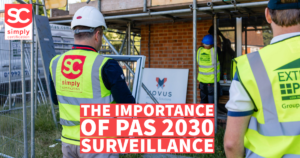
The importance of PAS 2030 Surveillance

What is the importance of PAS 2030 Surveillance, and why do I need to do it if I hold a PAS 2030 Certificate?

PAS 2030 Surveillance plays a vital role in ensuring compliance with industry standards within the retrofit market.

As part of the certification process for businesses installing energy efficiency measures, PAS 2030 ensures that companies comply with strict quality and performance requirements.

However, initial certification alone is not enough – ongoing surveillance audits are not only a requirement of the standard, but are vital in terms of helping to uphold quality, protect consumers, reduce risk to installers and maintain the industry’s credibility.

In this blog, we explore why PAS 2030 surveillance matters, how it works, and what businesses can do to stay compliant.

What is PAS 2030 Surveillance and why does it matter?

Achieving certification is just the first step.

Ongoing surveillance audits are conducted to verify that companies continue to meet PAS 2030 standards throughout the duration of the certification. This is a requirement of the standard and mandatory to retain certification.

Surveillance audits involve onsite technical inspection checks by Certification Bodies to assess whether businesses are maintaining the required level of quality and compliance in their installations.

This amount of surveillance inspections that a Certification Body must complete is between 1-10% of the installations they carry out under the PAS 2030 certificate.

How does PAS 2030 Surveillance work?

Certification Bodies conduct scheduled and sometimes random audits to inspect work carried out by their certified businesses. These assessments include site visits and documentation reviews – pre, mid or post installation.

The key aspects checked during surveillance visits are:

  • Quality of installations
  • Adherence to industry standards
  • Proper documentation and record-keeping
  • Compliance with health and safety regulations

If a business fails to meet PAS 2030 requirements during an audit non conformance’s will be raised. As long as the non conformance’s are addressed within the timeframe given then certification will remain in place.

Where an installer doesn’t respond to any non conformance’s, then the certification would then be put at risk of suspension or withdrawal.

Top Tips to remain compliant to PAS 2030

#1 Keep on top of your documentation and paper work

Incomplete or inaccurate records can lead to non-compliance. If you are finding that this is difficult to do, it maybe the systems and processes you have in place is not supporting your business and perhaps this needs to be reviewed. Your quality management system shouldn’t be seen as a pain! It should be helping not hindering you.

#2 Keep on top of your competency

All of your employees and subcontractors should be kept up to date with training, skills and knowledge. Keep track of this and ensure they are staying ahead in terms of competency, this not only makes you compliant, but also drives down risk to your business.

#3 Carry out internal audits

Businesses that do not regularly review their compliance status are likely to struggle and end up with a high number of non conformances from their CB. It is recommended in the PAS 2030 standard that internal audits are carried out regularly.

Conclusion

Now you know the importance of PAS 2030 Surveillance, and understand that PAS 2030 Surveillance is more than just a standard requirement—it is essential for maintaining high-quality energy efficiency installations, driving down risk, protecting consumers, and preserving industry credibility.

Businesses that stay proactive in compliance can avoid costly penalties, enhance their reputation, and contribute to a more sustainable future.

For businesses looking to stay ahead in compliance, investing in ongoing training, maintaining proper documentation, and preparing for audits are key strategies.

If you need assistance with PAS 2030 compliance, consider seeking professional guidance to ensure your business remains certified and trusted.

The Microgeneration Certification Scheme (MCS) has welcomed Simply Certification, its newest contractor certification body (CB), for the installation of small-scale renewables. Simply Certification is now recognised as an MCS certification body, which plays a crucial role in the industry.

The Importance of Selecting an MCS Certification Body

Simply Certification is the second CB appointed by MCS since 2022. It now offers MCS certification alongside APHC, NICEIC, HETAS, OFTEC, NAPIT and the IAA.

As an MCS certification body, Simply Certification contributes to raising industry standards.

As a prominent MCS certification body, Simply Certification ensures that all installations meet high standards and maintains its reputation as an MCS certification body.

As an MCS certification body, Simply Certification plays a vital role in promoting the installation of renewable technologies and upholding industry standards.

Since becoming UKAS (UK Accreditation Service) accredited in April to assess contractors to MCS standards, Simply’s client base of over 200 construction organisations and any new clients it attracts can now gain MCS certification to install low-carbon technologies to the highest standards, supported by an MCS certification body.

It is now licensed under MCS to deliver assessments for air source heat pumps (ASHP) ground/water source heat pumps (G/WSHP), solar PV and solar heating technologies.

Simply Certification is recognised for its ethos around quality and supportive approaches to certification, MCS accreditation complements its existing offering which benefits from its industry partnerships.

Ian Rippin, CEO of MCS, says, “We are pleased to broaden our selection of certification bodies and increase choice for contractors who want to gain MCS certification by welcoming Simply Certification to the scheme.

“Simply Certification join us at an exciting and pivotal time in MCS’s history as we launch our Scheme Redevelopment Consultation. This is inviting views on proposals to transform the way that the scheme operates. Simply Certification will allow MCS to expand our industry reach, and help us to champion quality and grow the number of MCS certified contractors.”

Alexandra Gates, Managing Director at Simply Certification, says, “We’re delighted to gain UKAS accreditation to certify contractors against the MCS standards. We’ve worked exceptionally hard to put in place an MCS assessor infrastructure that ensures the highest degrees of responsiveness and have a wide-reaching base of assessors stretching from Scotland down to the Isle of Wight. This latest achievement is a testament to the amazing team we have at Simply Certification.

“Our mission is to be the certification body of choice for businesses that operate within the built environment sector, and we continue to make progress towards that ambition. Over the last few months, we’ve been working closely with a range of stakeholders to help grow the UK retrofit supply chain and a number of our projects are coming to fruition making the pathway to certification and compliance a much smoother process.”

Richard Wiffen, Scheme Manager at Simply Certification, adds, “We’re uniquely positioned in that our focus and expertise is within the built environment – particularly around sustainability – delivering a range of ISO standards as well as PAS 2030 and now MCS Certification. This latest accreditation will add enormous value for our customers.”