7 Powerful Benefits for Better Business Quality
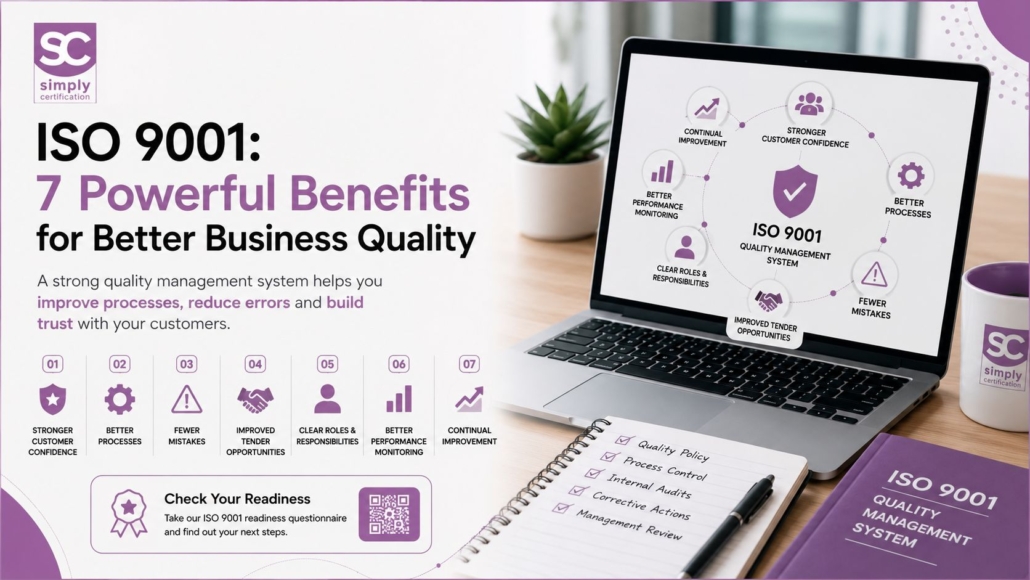
ISO 9001: 7 Powerful Benefits for Better Business Quality
ISO 9001 is the world’s best-known quality management standard. It gives businesses a clear way to improve how work is planned, delivered, checked and improved.
For many organisations, ISO 9001 is also a useful way to show customers, contractors and supply chain partners that quality is being managed properly. A strong quality management system helps your team work consistently, keep better records, reduce avoidable errors and respond to issues before they become bigger problems.
This ISO 9001 guide explains what the standard is, why it matters, what certification involves and how to understand whether your business is ready.
Before you start the full ISO 9001 certification journey, the best first step is a simple readiness check. Complete our questionnaire here: ISO 9001 – Self Assessment
What is ISO 9001?
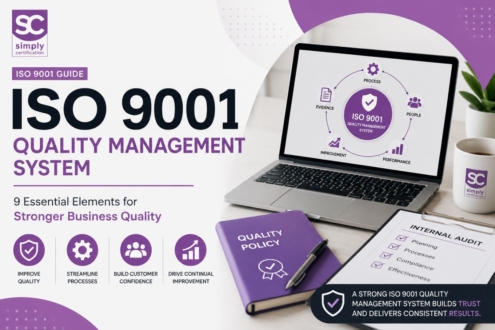
ISO 9001 is an international standard for quality management systems. A quality management system, often called a QMS, is the way your business manages quality across its services, products, people, processes and records.
ISO 9001 does not tell every business to work in the same way. Instead, it sets out requirements that help organisations build a system that is suitable for their size, sector and activities.
In practice, this means having a clear structure for how you:
- Understand customer requirements
- Plan and control your work
- Manage roles and responsibilities
- Keep documents and records organised
- Monitor performance
- Handle complaints or problems
- Take corrective action
- Review results
- Improve over time
The aim of ISO 9001 is not to create paperwork for the sake of it. The aim is to create a practical system that supports the business and gives customers confidence.
You can also read the official ISO overview of the standard here: official ISO guidance.
Why quality management matters
Every business wants to deliver a good service, and ISO 9001 gives that aim a clear structure. The challenge is doing that consistently, especially as the team grows, projects become more complex or customer expectations increase.
Without a clear management system, quality can depend too heavily on individual habits. One person may follow a process carefully, while another may do things differently. Records may be saved in different places. Customer feedback may not be reviewed. Issues may be fixed quickly but never investigated properly.
A QMS helps bring everything together. It makes your approach clearer, more consistent and easier to evidence.
This is especially important for businesses that work in construction, retrofit, renewables, manufacturing, facilities management, engineering or public sector supply chains. In these sectors, customers often need proof that a company can deliver safely, professionally and consistently.
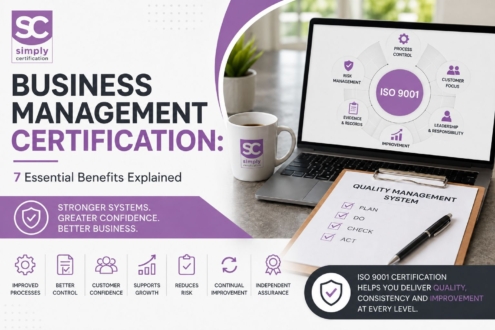
7 powerful benefits of certification
1. Stronger customer confidence
ISO 9001 certification shows that your organisation has been independently assessed against a recognised standard.
For customers, this can be reassuring. It shows that your business has structured processes in place and is committed to managing quality properly.
It can also support conversations with larger clients, main contractors, housing providers, local authorities and procurement teams.
2. Better internal processes
A good ISO 9001 management system helps your team understand how work should be carried out.
This can include how enquiries are handled, how quotes are checked, how projects are planned, how suppliers are reviewed and how customer feedback is recorded.
When these processes are clear, the business becomes easier to manage. It also becomes easier to train new staff and maintain consistency across different teams or locations.
3. Fewer avoidable mistakes
Mistakes are often caused by unclear processes, missing records, poor communication or lack of responsibility.
ISO 9001 helps businesses identify where things could go wrong and put sensible controls in place.
This does not mean mistakes will never happen. It means your business has a clear way to prevent issues, respond to them and learn from them.
4. Improved tender opportunities
Many tenders, frameworks and approved supplier lists ask businesses to show evidence of quality management.
Having ISO 9001 certification can strengthen your position because it gives procurement teams a recognised form of assurance.
For contractors and installers, this can be particularly valuable when applying for larger projects or working with organisations that need documented quality controls.
5. Clearer roles and responsibilities
A quality system should make it clear who is responsible for key activities.
This helps reduce confusion, missed tasks and duplicated work. It also supports accountability because people understand what is expected and what records need to be kept.
6. Better performance monitoring
Good quality management is based on evidence.
This can include customer satisfaction, audit findings, complaints, non-conformities, supplier performance, training records and management review actions.
When this information is reviewed regularly, leaders can make better decisions and focus on the areas that need improvement.
7. Continual improvement
One of the most valuable parts of ISO 9001 is continual improvement.
This means reviewing what is working, identifying what is not and making practical changes. Improvements do not always have to be major projects. Small changes to templates, handovers, communication or record keeping can make a big difference over time.
Who is ISO 9001 suitable for?
ISO 9001 can be used by organisations of different sizes and sectors. It is suitable for small businesses, growing teams, established contractors and larger organisations with multiple sites.
It is commonly used by:
- Construction companies
- Contractors and subcontractors
- Retrofit businesses
- Renewable energy installers
- Manufacturers
- Engineering firms
- Facilities management providers
- Consultants
- Service companies
- Public sector suppliers
For smaller businesses, the system should be proportionate. You do not need to create a complicated structure if your work is simple. The key is to have a clear, controlled and useful way of managing quality.
What does a quality management system include?
A practical QMS usually includes a mix of policies, processes, responsibilities and records.
Typical ISO 9001 areas include:
- Quality policy
- Quality objectives
- Scope of the system
- Process map
- Risk and opportunity register
- Document control
- Staff competence and training records
- Supplier approval and review
- Customer feedback
- Complaint handling
- Non-conformance records
- Corrective actions
- Internal audit programme
- Management review records
The exact documents needed will depend on your business. A small installer will not need the same level of complexity as a large contractor with several departments and sites.
The most important question is whether the system helps your team do the right things consistently.
How the ISO 9001 process approach works
The process approach is a central idea in quality management.
It means looking at your business as a set of connected activities. Each process has inputs, outputs, responsibilities and controls.
For example, a contractor might have processes for enquiry handling, quoting, order acceptance, project planning, purchasing, site delivery, inspection, handover and customer care.
When these processes are mapped clearly, it becomes easier to see how work moves through the business. It also helps identify risks, delays, gaps and opportunities for improvement.
This approach can be especially helpful when different people or teams are involved in delivering the same outcome.
What is risk-based thinking?
Risk-based thinking means looking ahead and asking what could affect your ability to deliver quality.
Common risks include:
- Customer requirements being misunderstood
- Staff not being trained
- Suppliers missing deadlines
- Documents being out of date
- Records not being completed
- Equipment not being maintained
- Complaints not being reviewed
- Project changes not being communicated
ISO 9001 does not expect every risk to disappear. It expects your organisation to understand the important risks and take sensible action.
It also asks businesses to think about opportunities. This might include improving communication, reducing waste, simplifying processes, using better software or improving customer updates.
What happens during ISO 9001 certification?
ISO 9001 certification normally involves an independent audit of your management system.
The ISO 9001 audit checks whether your system meets the requirements and whether it is being followed in practice.
There are usually two main stages.
Stage 1 audit
The first stage checks whether your business is ready for the full assessment. The auditor usually reviews your documented information, scope, processes and general preparedness.
If there are major gaps, these need to be addressed before moving to the next stage.
Stage 2 audit
The second stage is a more detailed review. The auditor looks for evidence that your system is working.
They may review records, ask questions, check processes and look at how issues are managed.
If the system meets the requirements, certification can be recommended.
After this, surveillance audits are carried out to check that the system continues to be maintained. A recertification audit is normally required later in the certification cycle.
What is UKAS accredited certification?
In the UK, many organisations look for ISO 9001 certification from a UKAS accredited certification body.
UKAS is the UK’s National Accreditation Body. Its role is to assess organisations that provide services such as certification, testing and inspection.
This matters because it gives customers more confidence that the certification body has been independently assessed.
You can verify accredited management system certificates through UKAS CertCheck.
When talking about this, it is important to use the right wording. A business is certified to the standard. The certification body is accredited by UKAS.
How long does ISO 9001 take?
The timescale depends on how prepared your business already is.
You may move more quickly if you already have clear processes, records, internal audits and management reviews in place.
It may take longer if you need to build the system from the beginning, train staff, organise documents or collect evidence.
The best way to estimate your next steps is to complete a readiness review. This helps identify what is already in place and what needs work before an external audit.
ISO 9001 readiness checklist
Use this ISO 9001 checklist to understand whether your business may be close to certification.
Do you have:
- A quality policy?
- Clear quality objectives?
- A defined scope?
- A process map?
- Controlled documents and records?
- A risk and opportunity register?
- Training and competence records?
- Supplier controls?
- Customer feedback records?
- Complaint records?
- Non-conformance records?
- Corrective action records?
- Internal audit evidence?
- Management review records?
- A clear plan for continual improvement?
If you are unsure about several of these points, your business may need more preparation.
Complete our readiness questionnaire here: ISO 9001 – Self Assessment
Common mistakes to avoid
Many businesses make the process harder than it needs to be.
The most common mistakes include:
- Creating documents that are too complicated
- Copying templates that do not match the business
- Leaving the system to one person
- Not involving senior management
- Forgetting to complete internal audits
- Not recording corrective actions properly
- Treating certification as a one-off task
- Waiting until the audit to fix known issues
A strong system should be simple enough for your team to use and strong enough to give confidence during an audit.
Is ISO 9001 changing?
ISO 9001:2015 is currently the published version, with a revised edition expected in 2026.
For businesses already working towards certification, the best approach is to focus on strong foundations. Clear processes, risk management, internal audits, management reviews and continual improvement will remain important.
If changes affect your system, these can be reviewed as part of your ongoing improvement and transition planning.
Frequently asked questions
What does ISO 9001 mean?
ISO 9001 is the international standard for quality management systems. It helps organisations show that they have clear processes for meeting customer, legal and regulatory requirements.
Is certification mandatory?
It is not mandatory for every business. However, it may be requested by customers, contractors, frameworks, supply chains or tender opportunities.
Can small businesses get certified?
Yes. The standard can be applied to small businesses as long as the system is suitable for the size and complexity of the organisation.
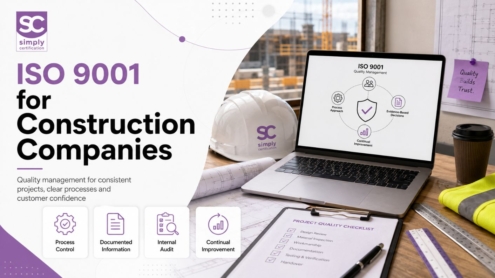
Is ISO 9001 useful for construction companies?
Yes. It can help construction companies improve project control, supplier management, records, customer satisfaction and tender readiness.
What is the first step?
The first step is to understand your current position. A readiness questionnaire can help you see whether your documents, processes and records are prepared for audit.
Ready to check your position?
A strong quality management system can help your business improve consistency, reduce errors, strengthen customer confidence and prepare for new opportunities.
You do not need to guess where you are up to. Our readiness questionnaire gives you a simple way to understand your current position and identify the next steps.
Complete the questionnaire today: ISO 9001 – Self Assessment